I’m on a mission to love myself: So I stripped down and tried Boudoir.

By Kelcie McKenney, Photos by Tayanna Harris
This story was originally published in The Pitch.

It’s a Tuesday morning, and I’m naked in front of three strangers.

I’m changing into my first set of lingerie at Tayanna Harris’s Good Bodies photo studio for my first boudoir session. You know, that photo trend where you strip down to your knickers and pose seductively in an effort to feel good about yourself and your body.

“Oh, I love that,” Harris says as I’m draped over a chair, my legs kicked above me.

“Honestly, you look like this devious housewife who might kill her husband and get away with it,” says Katie Camlin, Harris’s photo assistant, who is showing off our shoot on social media today.

It was all I needed for a confidence boost: This faux-housewife was feeling herself.

Continue reading

It’s International Female Orgasm Day, and 40% of straight women still aren’t orgasming

By Kelcie McKenney

Have you heard about the Orgasm Gap?

Forty percent of straight women don’t reach orgasm during sex, while 95 percent of straight men reach orgasm in every sexual encounter. As if dealing with the glass ceiling wasn’t enough, women in heterosexual relationships aren’t coming enough. And everyone deserves a big orgasm these days.

In honor of today’s International Female Orgasm Day, PornHub is giving men a taste of the Orgasm Gap. All of today, Pornhub is interrupting videos most popular with straight men at the 40 percent mark with a quick video about how women in hetero relationships aren’t getting the pleasure they deserve.

Continue reading

Loving Loving Day: How Richard and Mildred Loving Paved the Way for Interracial Relationships—Including My Own

By Kelcie McKenney

On June 12, 1967, the Supreme Court decision on Loving v. Virginia struck down 16 state bans on interracial marriage.

The case was centered on the couple Mildred and Richard Loving. Mildred was an Indigenous Black woman and Richard was a white man. The couple was married in 1958 in Washington—where interracial marriage was legal—then moved to Virginia. In the middle of the night, their local sheriff broke into their home and charged them with violating Virginia’s anti-interracial laws.

Continue reading

White People: Let’s Stop Cherry-Picking MLK’s Words and Instead Listen to What We Need to Do for Change

By Meg Pawley

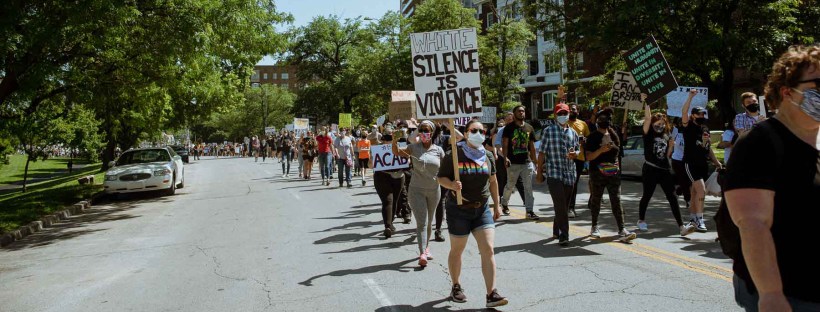
If you take a look around the Twin Cities today, you might mistake it for the year 1967. As a reaction to the repeated, state-sanctioned execution of black men and women that continues in the US today, an uprising has begun. What began as peaceful protests in 1967 became bona fide race riots all over the country. When discussing the riots, Dr. King said:

“Riot is the language of the unheard, and what is it that has America failed to hear? It has failed to hear that the promises of freedom and justice have not been met. And it has failed to hear that large segments of White society are more concerned about tranquility and the status quo than about justice, equality, and humanity.”

Those words are still relevant today, as the peaceful protests in Minneapolis and Saint Paul have also ended in riots. Engagingly, in the wake of the murder of George Floyd, I have seen far more white people criticize the riots than the senseless act itself. Most of them accompany their (unwarranted) opinion with one quote or another from Dr. King that, taken wildly out of context, seems to only promote peace and love. 

Continue reading

Black communities paved the way for Asian-American communities. Here’s how Asian-Americans can support #BlackLivesMatter

By Ishani Doshi

I want to share these resources for other Asian Americans to help understand how importantly Allyship is for People of Color. If your family immigrated after 1965, you are here because of the Civil Rights Movement and the passing of the 1965 Immigration and Nationality Act. Asian American communities exist because Black communities in America paved the way for us, and made it possible for us to seek a better life for our families. We need to do our part both within our own communities and externally to ensure we are part of the solution and not the problem of racial injustice.

Continue reading