

By Emily Laptad
Photo by Travis Young
I never had an official “coming out” moment. In a way, this very article might be the closest thing I’ll ever do to officially “come out as bisexual.” But here’s the thing. I am already out to everyone who is paying attention.
And it wasn’t until I was ranting to my husband about the latest drama around the dialogue of Taylor Swift’s sexuality that I came to a colossal realization. As words flew out of my mouth at 100 mph, my insightful spouse pointed out that I am so upset with what’s happening because I see myself in what seems to be Taylor’s story.
Let me back up a little bit. I am a huge Taylor Swift fan. I also call myself a Gaylor—though not one of the Gaylors who looks at Taylor’s every step and tries to connect all the dots of her past to the present, bless those who have that dedication. If you’re not familiar with us Gaylors, we’re simply a group of fans who recognize just how queer-coded Taylor’s songwriting, artistic choices, and personal style are—it takes one to know one, and there are so many signs.
For context, the GaylorSwift subreddit has 28,000 members, and if you type Gaylor into the search bar on Twitter (ugh, please don’t make us say X) or TikTok, you’ll be met with hundreds of thousands of fans pointing out queer symbols and codes spelled throughout the empire Taylor has built.
I can’t speak for all of the Gaylors, but for me, toying with the idea that Taylor Swift might be queer has been comforting—and if you pay attention, there’s a lot of evidence that she may be. She hasn’t had an official coming out, but for a lot of us Gaylors, she’s out to the people who are paying attention.
I’m not going to sit here and write that Taylor Swift’s queerness is an absolute fact. She is the only one who could confirm that. But I am going to share that if you’re not part of the LGBTQ+ community, you can’t know what it’s like—and just because you haven’t stood in front of a camera and told the entire world that you’re queer doesn’t mean you aren’t. Nor does it mean that it’s not a part of your identity that you’re proud of. It simply means that the world is complicated and often unkind to people who belong to marginalized groups—and that is especially true for someone with as much stardom as Taylor Swift.
While it’s easy to think that if Taylor Swift were queer that she would use her star power to help end stigmas around the LGBTQ+ community by coming out, it’s not that simple. Heck, Billie Eilish casually came out in an interview late last year, and within 30 days, she lost almost 180,000 Instagram followers. When a reporter later asked Eilish if she meant to come out in that interview, she said, “I kind of thought, ‘Wasn’t it obvious?’ I didn’t realize people didn’t know.” And here’s the thing, Eilish has a fan base that leans much further left than the Swifties—a group that yes, includes a lot of liberals, but also still includes plenty of moderates and conservatives. From my own vantage point as a queer person, Eilish coming out was no surprise at all. I already figured she was probably queer because I recognized the signs. (Us queers have a fairly specific set of style senses—and many of my queer friends reacted similarly. For me, it was Eilish’s green and black hair, plus a clothing style that crosses gender boundaries that set off my gaydar.
But heartbreakingly, Gaylors simply existing, has unearthed the internalized homophobia in the overarching Swiftie fandom—and the world, if I’m being honest. While Taylor has even interacted with some Gaylor content on social media (leaving a subtle heart reaction on various related TikToks), there’s been too much offensive dialogue from other Swifties calling Gaylors predatory and creepy. Yet, it’s totally fine and not creepy to speculate about Taylor’s possible relationships with male partners and which songs and lyrics might be about them.
A few days ago, Opinion Editor Anna Marks penned a 5,000-word op-ed in The New York Times daring to speculate that Taylor Swift just might be one of us LGBTQ+ people, and the public reaction has been disappointing. I thought Marks poetically—and tastefully—captured what it is to be a Gaylor while pointing to Taylor’s queer-coded lyrics and stylistic choices and why it wouldn’t be unreasonable to conclude that she’s queer (bisexual, if you’re wanting specifics).
So, I had to take a moment when I was scrolling through Instagram this evening and came across Buzzfeed’s latest article on it: Taylor Swift’s Team Is Reportedly Fuming Over An Op-Ed That Crossed The Line In Speculating About Her Sexuality. I encourage you to read it yourself, but my initial thoughts were that it’s unclear if the quotes in the article came from Taylor’s team. If they did in any way, I would guess that it came from Scott Swift, Taylor’s dad, who’s known to be combative toward Taylor taking a political stance of any kind (in the 2020 documentary Miss Americana, a scene features an upset Taylor when her dad is trying to convince her not to take a public stance on Donald Trump when it was really important to her)—but that’s neither here nor there.
It was the way the Buzzfeed article deemed the NYT op-ed as an “icky” perspective, a direct hit on the Gaylors that oozes homophobia, that irritated me. While I agree that it might be icky if The Times speculated on the specific people Taylor Swift has shared her bed with in the past, wondering if Taylor’s use of very well-known queer symbols is her telling us that she’s one of us feels appropriate—especially when Taylor has made a career out of dropping Easter eggs for fans to find. Taylor Swift is a calculated mastermind. She doesn’t do things by accident. And from a queer perspective, if she’s not part of the queer community, her use of queer coding would be at best a poor attempt at allyship and at worst outright queerbaiting.
This is about where I was in my rant to my husband when he pointed out the personal parallels. Taylor Swift is seemingly leaving behind all the clues people need to see her as a queer person, which is what I have been doing since I figured out I was bisexual four years ago.
I grew up in a super-conservative setting where being even a little gay was considered so incredibly immoral. I spent years ignoring all the signs that I also find women sexually attractive, and it wasn’t until I was literally on my deathbed that I recognized that part of myself and realized my queerness as part of my identity. But even then, I didn’t have an official coming out to very many people. I was still scared of how the people I grew up with—especially my family—would see me.
So, I started dropping subtle hints about my sexuality, knowing that the people who recognized me would be the people I could trust with the part of my identity I was proud of but didn’t want judgment for.

During Pride Month that year, I added a frame to my profile photo with rainbows on the top and bottom and the colors of the bi-pride flag on each side. I added a pink, purple, and blue heart to my bio on Twitter and Instagram, and I started sharing more content about queer topics. I got the classic “bisexual haircut,” I started cuffing all my pant legs, and I sought out clothing that felt queerer. I was out to anyone who was paying attention, and I have been out for four years now.
I gave so many signs, it was just hard to see because I’ve been in a very committed relationship with the man I now call my husband since before I figured out I was bisexual.
It wasn’t until the last year or two that I started casually mentioning my sexuality in conversation. It’s not a secret, and if you ask, I will absolutely tell you that I’m bi. But I also don’t have anywhere near as much at stake as Taylor Swift does. If she confirms her sexuality, it will have an impact on her career. People will say unkind things. And she very well might lose her spot at the top of the music industry she has shed so much blood, sweat, and tears for. If Taylor Swift comes out as queer, it would be incredibly brave, and it would mean a lot to the queer community. But she doesn’t have to officially come out to anyone to be one of us. She very well may be hiding in plain sight, and if she is, we see her. I see her.
I hope you see me too.
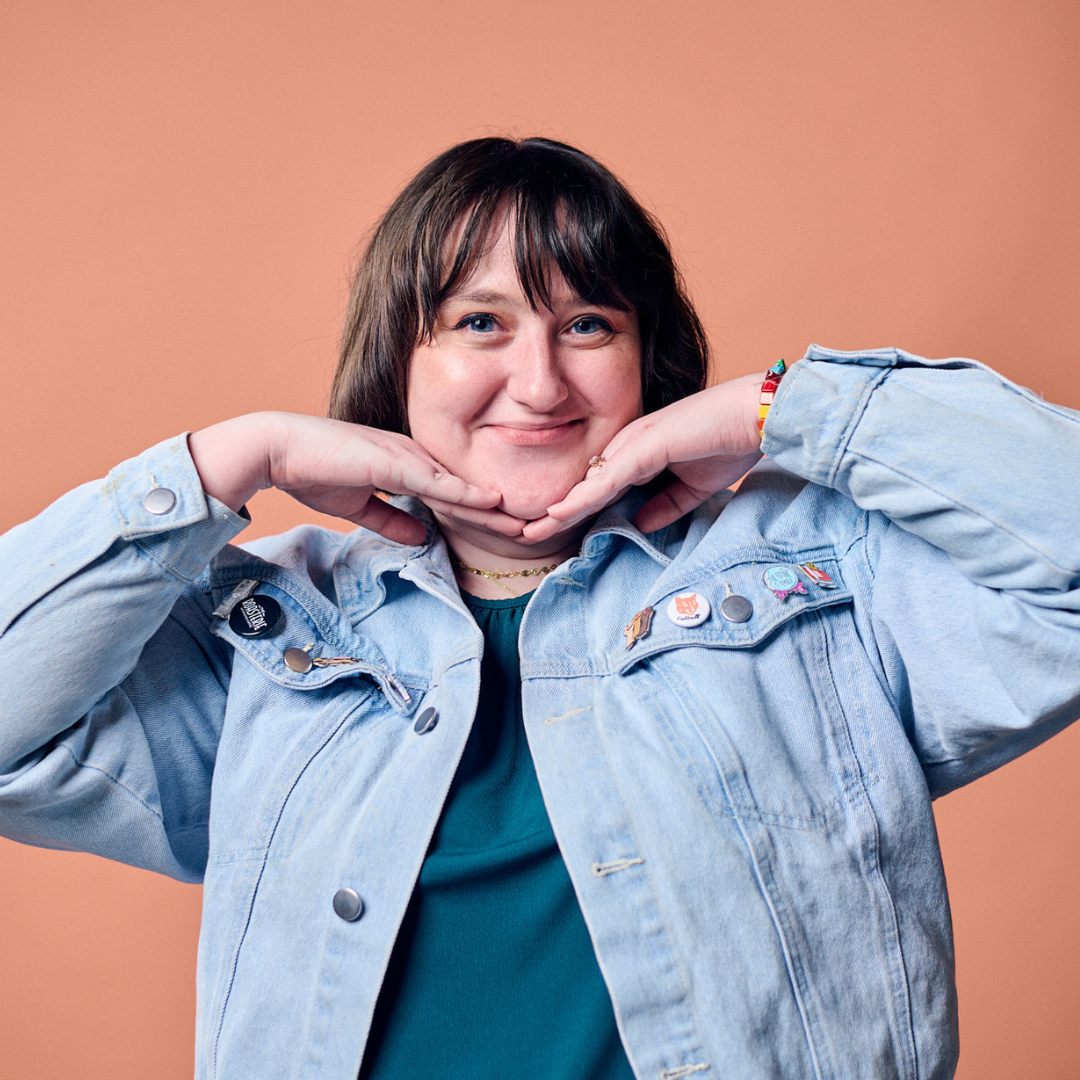
Emily Laptad (she/her) is a Kansas City-based writer and editor who’s passionate about giving a platform and a voice to those who don’t always have one. In her free time, you can find Emily with her nose in a book, singing her current favorite Taylor Swift song, playing Mario Kart with her spouse, or cuddling up with her dogs and cat.
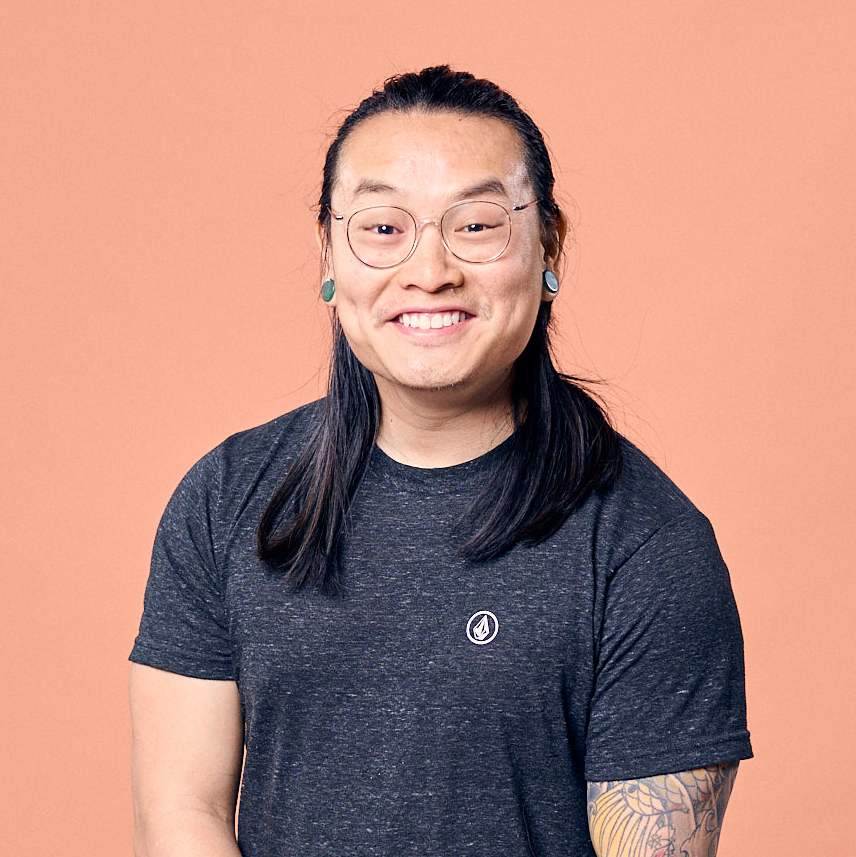
Travis Young (he/him)is a Kansas City based photographer with roots in photojournalism and visual storytelling. He enjoys using film cameras to help him process, celebrate, and challenge his understanding in topics of race, gender, status, and mental health. When not behind a camera, you can find him creating things in 3D, obsessing over your grandmother’s dope Volvo Wagon from the 80’s, or getting lost in some tedious cleaning activity because he is a relentless Virgo.
 Catcall
One thought on “Leave the Gaylors alone, your internalized homophobia is showing”