#Gamergate: A Feminist Content Analysis on the Depiction of Women in Video Games Part 2

By Russell Barnes

The following article is part of a multi-part series of excerpts from the author’s senior thesis. Start at the beginning here.

Analysis of Tropes – Hegemonic Masculinity in Video Games

The thesis takes a look at three popular tropes that female video game characters are often subject to in the medium: the male gaze, the damsel in distress and the female “clone.” The male gaze is often depicted as a “perception” that things are created for the man. The damsel in distress trope often involves the depiction of a character, usually a female, being rescued by a male in the matter of competition or bribery, while potentially serving as the rescuer’s love interest. The female “clone” trope involves a female character being created from a male template, and/or borrowing traits from a pre-existing male character. A major component to how these tropes work, as well as hegemonic masculinity, is character interaction – particularly with male and female characters.

Continue reading

#Gamergate: A Feminist Content Analysis on the Depiction of Women in Video Games

By Russell Barnes

The following article is part of a multi-part series of excerpts from the author’s senior thesis.

Introduction

What is #Gamergate?

#Gamergate is more than a hashtag that went viral on Twitter in fall of 2014; it is a controversy that is rooted in decades of sexism in one of the fastest growing mediums – video games. At first glance, the modern video game market seems vastly different compared to 1977, when the Atari 2600 became the first multi-game home console to be released to the consumer market[1]. Video game graphics are much improved, there are more competitors in the video game market, and games are more accessible than ever, thanks to smartphones, tablets and other advances in mobile technology. However, some aspects of the video game industry are still the same. Some of the most well-known video game characters of the modern era got their start on Atari’s console, such as Pac-Man and Mario of the Super Mario Bros. franchise. Alongside these characters, much of the complaints of sexism within the video games and inside the industry have continued to be upheld, or in some cases, escalate in severity and frequency.

Continue reading

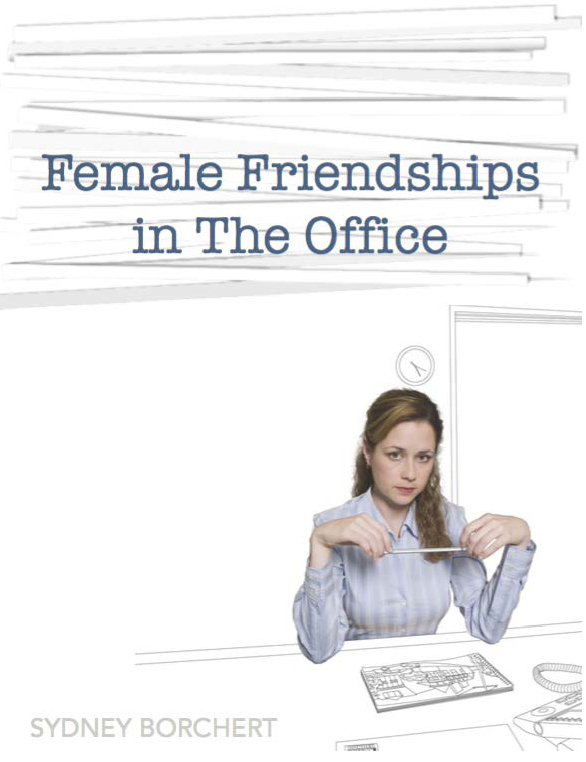
Exploring Female Friendships in “The Office”

By Sydney Borchert

Pages from The Office Paper

The term friendship surfaces images of a kindergarten classroom. This picture, in my mind, involves youngsters crafting paper people and chains singing “kumbaya” in a close-knit circle. Friendship is trust. Friendship is intimacy. Friendship is equality. Although an image of cheek-squeezable, singing children brings smiles and good cheer, friendship possesses deeper layers. You see, the term dates back to the 1670s (bear with me, I promise this isn’t a history lesson). The Quakers, also known as Friends, were members of a large Christian movement. Known as the Society of Friends, the people established their own way of life. The women were held to a certain standard: running the household and caring for the children.

Continue reading

“Girls” and the Reality of Sexual Assault

By Kayla McCombs

I recently started watching the HBO series “Girls.” The decision to watch it stemmed from an odd mixture of my crush on Adam Driver and my irrepressible desire to have an opinion on everything and everyone, including the series’ creator Lena Dunham. As a person who cares deeply about social justice issues, I had “Girls” in the back of my mind for a while due to a lot of controversy over its lack of racial diversity and abrasively middle-class characters. That was my motivation to watch the show—I wanted to argue about it.

Photo by Rene Böhmer

While the aforementioned issues are undeniably important, I won’t be touching on them in this post. Instead, I want to delve into the topics of sexual assault and relationship abuse, two very real problems that are to this day clouded with controversy and misunderstanding. Sexual assault and abuse are often portrayed as being straightforward and easy to identify in film and television. While they both have distinct definitions—and it would be great if the world could be on the same page as to what constitutes either of them—the reality is that most cases come across as ambiguous and confusing. This, naturally, is a major source of pain for many victims who feel unsupported or discouraged from speaking out or asking for help.

Continue reading