Writing Our Legacies: Memory Work & Reclaiming Black Queer Narratives

By Max Sheffield
Photos by Whitney Young

Family is a tricky subject for queer people. Understanding our lineage? Even more so. 

Speaking with queer elders about what they have faced and what we can learn has been a moving part of my own journey toward acceptance and understanding of my identity.

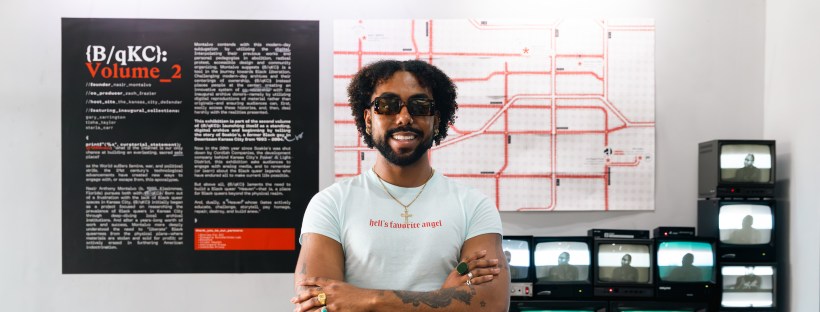
But as a white queer person, you cannot start to have these questions without acknowledging the visibility and privileges that white queer people have over queer Black and Brown folks. They have led the way for queer liberation, but their stories can be hard to find. The local media archive, B/qKC (Black/queer Kansas City), provides a space for those stories to get the representation they deserve.

Continue reading

How to Have Antiracist Conversations with Dr. Manning

By Sophia-Joelle McDowell
Art by Kelcie McKenney

As a Black Caribbean immigrant to the United States, Dr. Roxy Manning experienced racism early in life—both at school and out in the community. These experiences fueled her passion to tackle the topic of racism in her book, How to Have Antiracist Conversations: Embracing Our Full Humanity to Challenge White Supremacy. She also co-authored with Sarah Peyton the companion text, The Antiracist Heart: A Self-Compassion and Activism Handbook.

Roxy Manning, Ph.D., is a clinical psychologist and certified Center for Nonviolent Communication (CNVC) trainer. 

She has worked closely with businesses, non-profits, and government organizations throughout the United States to help them make progress in equitable and diverse workplace cultures. Additionally, Dr. Manning has worked with people in many other countries focusing on social change. She even works as a psychologist in San Francisco, serving the houseless and disenfranchised mentally ill population.  

We spoke with Dr. Manning about the creation of this book and the possibilities of what it could mean to others. 

Continue reading

Author Alice Faye Duncan Reflects on Activist Opal Lee, Meaning of Juneteenth

By Sophie Oswald

In 1863, the Emancipation Proclamation freed slaves in the South, but the decree wasn’t fully enacted until two years later on June 19, 1865, when news reached enslaved people in Texas that they were free. 

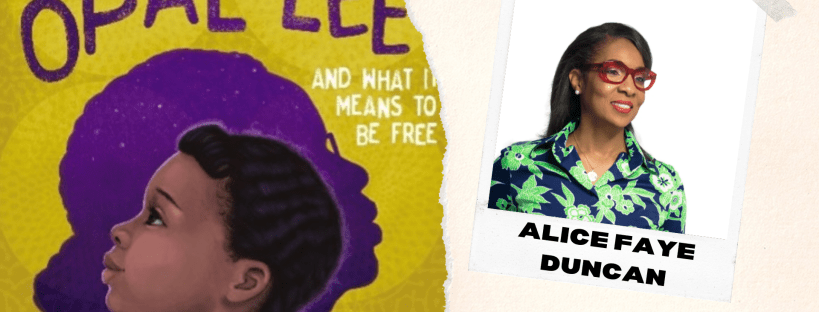
Since, June 19, or Juneteenth, has marked celebrations of the end of slavery, but it wasn’t until last year that Juneteenth became a federal holiday through a bill signed by President Joe Biden. One of the people in the room that day was Opal Lee, the focus of Alice Faye Duncan’s newest children’s book, Opal Lee and What It Means to Be Free. 

Opal Lee, also known as the “grandmother of Juneteenth,” played a key role in making Juneteenth a federally-recognized holiday.

Continue reading

Uzazi Village is nurturing Black mothers and birthing bodies, and fighting health inequities in Kansas City

By Kelcie McKenney

Sandra Thornhill came to Uzazi Village in 2018 when she was pregnant with her son Jerren Junior. 

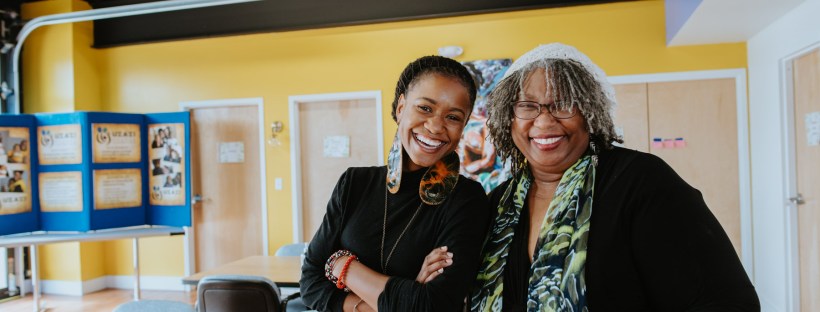
“That’s where I met the co-founder and CEO of Uzazi Village, Mama Hakima,” Thornhill said of Uzazi Executive Director Hakmia Tafunzi Payne. She had stopped by for a labor and delivery class and got to talking to Payne about where she wanted to give birth. At the time, Thornhill wanted to have a home birth, but felt like going to the hospital was easier. 

“But [Payne], being the true, authentic, warrior sister that she is, called me out,” Thornhill recalled. It turned into an hour long conversation about the autonomy of Thornhill’s body and that she had every right to determine how she wanted her birth to take place.

“Two years later, that has taken me on a journey to always question, ‘Am I being the most true and authentic?’” Thornhills said. “So after having my son, who is a boy, I realized that my first child would be a Black male. And looking at the climate of the existence and history of Black men in America—not only in America, because I’ve traveled internationally—and seeing how the Black male was treated, that made me realize I don’t want him to have to wait until he’s 27 or 28 to realize that your voice matters.”

Continue reading

White People: Let’s Stop Cherry-Picking MLK’s Words and Instead Listen to What We Need to Do for Change

By Meg Pawley

If you take a look around the Twin Cities today, you might mistake it for the year 1967. As a reaction to the repeated, state-sanctioned execution of black men and women that continues in the US today, an uprising has begun. What began as peaceful protests in 1967 became bona fide race riots all over the country. When discussing the riots, Dr. King said:

“Riot is the language of the unheard, and what is it that has America failed to hear? It has failed to hear that the promises of freedom and justice have not been met. And it has failed to hear that large segments of White society are more concerned about tranquility and the status quo than about justice, equality, and humanity.”

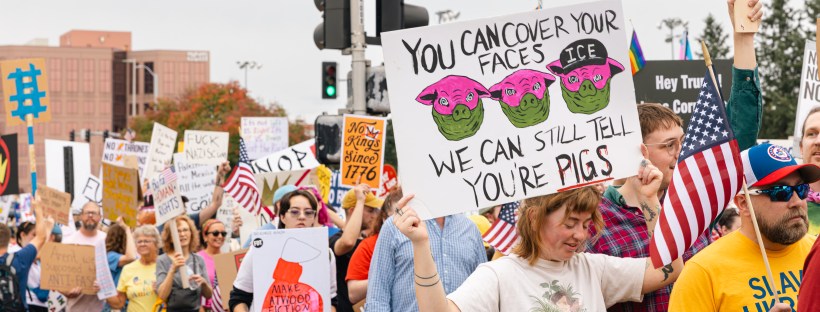
Those words are still relevant today, as the peaceful protests in Minneapolis and Saint Paul have also ended in riots. Engagingly, in the wake of the murder of George Floyd, I have seen far more white people criticize the riots than the senseless act itself. Most of them accompany their (unwarranted) opinion with one quote or another from Dr. King that, taken wildly out of context, seems to only promote peace and love. 

Continue reading