
By Sophia-Joelle McDowell
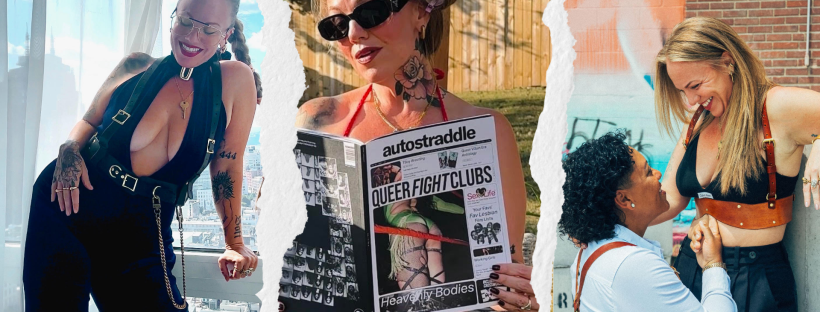
Erin Brown is a lesbian influencer and advocate for queer culture. Her podcast The Lesbian Peep Show covers all things lesbian, sapphic, and dyke culture—from queer history and identity development to body politics, relationships, and more. Along with her podcast, she also created The Sapphic Syllabus archive to preserve and promote lesbian narratives and histories. We spoke about the pod, authentic expression, activism, and everything in between.
Catcall: Tell us about yourself and the path that led you to where you are today.
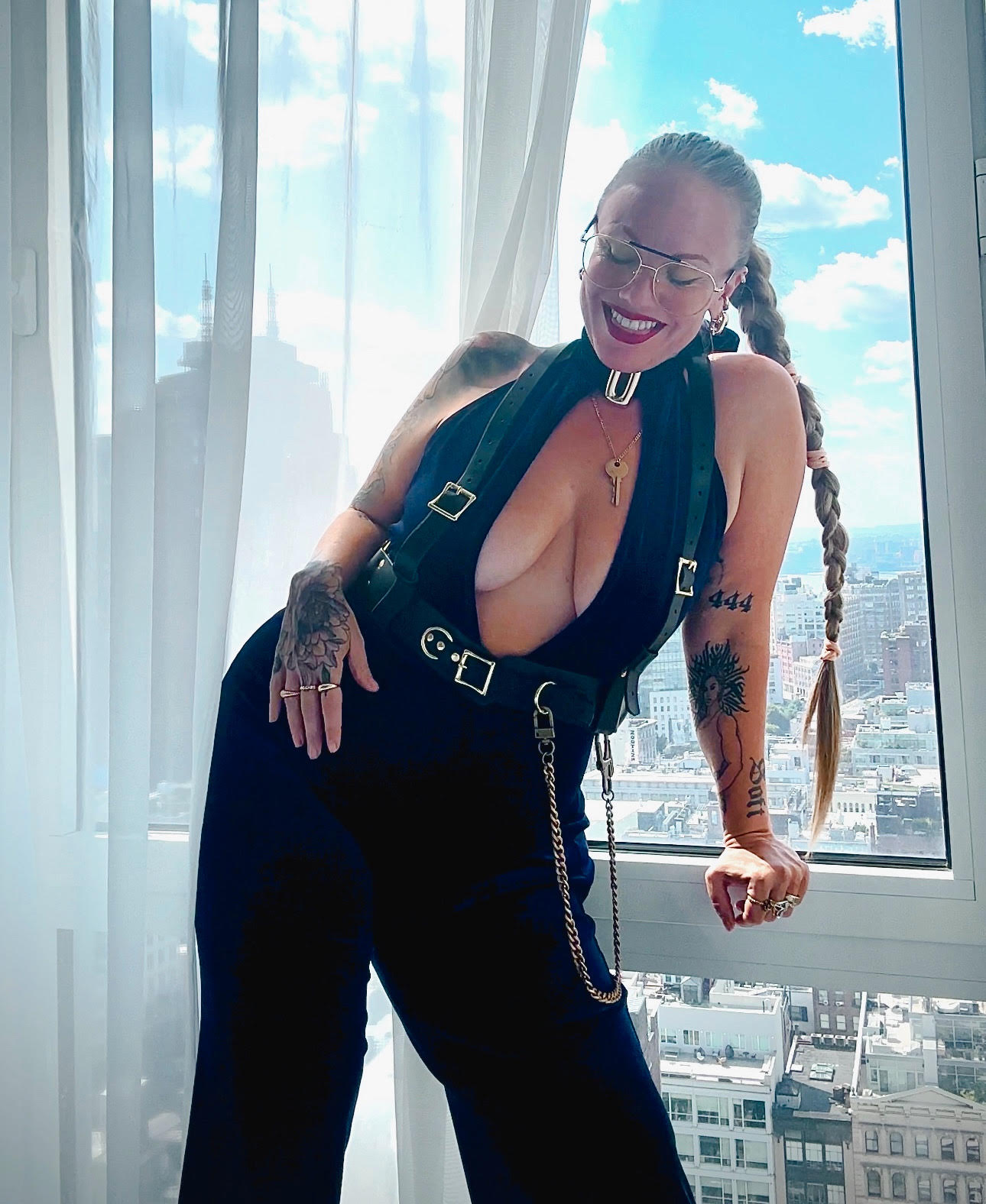
Erin: I have been writing books, essays, and online content about identity and body politics in a variety of ways since the inception of social media. That work has evolved with me through examining my relationship with my body, purity culture, the impact of sexual assault on body image, and sexual health. Now my content revolves around lesbian/sapphic/dyke culture and identity development. I also have a podcast around this work. As there was so much I had to go searching for, even inside of queer history, to find lesbian representation.
This might sound silly but I was floored, for example, to find out about all of the lesbian involvement in the Stonewall riots and specifically Stormé DeLarverie who was so instrumental in patrolling the area and protecting queer people during that time. Which is not to take anything from the important figures I was aware of in that time and space. But everywhere there is queer history there are also lesbian/sapphic people, often in the protection and organization of spaces. And it’s important to me to know about those people and their roles as it grounds me in history that I’m a part of.
I love that you’re so authentically yourself. Have you always felt so confident in your skin and been a proud lesbian or did it take a little while to get there?
Confidence is often framed as something I should or would struggle with. For me that is less about sourcing some bravado from somewhere inside me, but rather shedding external projections that anything about me is worthy of shame. I don’t agree with beauty standards that aren’t expansive and wouldn’t include me, so I don’t have to measure up to anything but my own likes and desires. I don’t agree that women shouldn’t have perspectives, know their intelligence, or speak as though they have authority on their own experience, and so I don’t have to shy away from those things. I don’t believe that being a lesbian is wrong, or that I don’t get to define my own experience, so both intra-culturally and otherwise, I’m clear about who I am. My confidence moment-to-moment is conditional on so many factors, like everybody else. But I think what is read as confidence in me is just not playing the heteronormative conditioned role of woman which includes insecure in my voice and docile. And less to do with building myself up and more to do with undoing conditioning and projections.
Can you tell me how The Lesbian Peep Show podcast came to be?
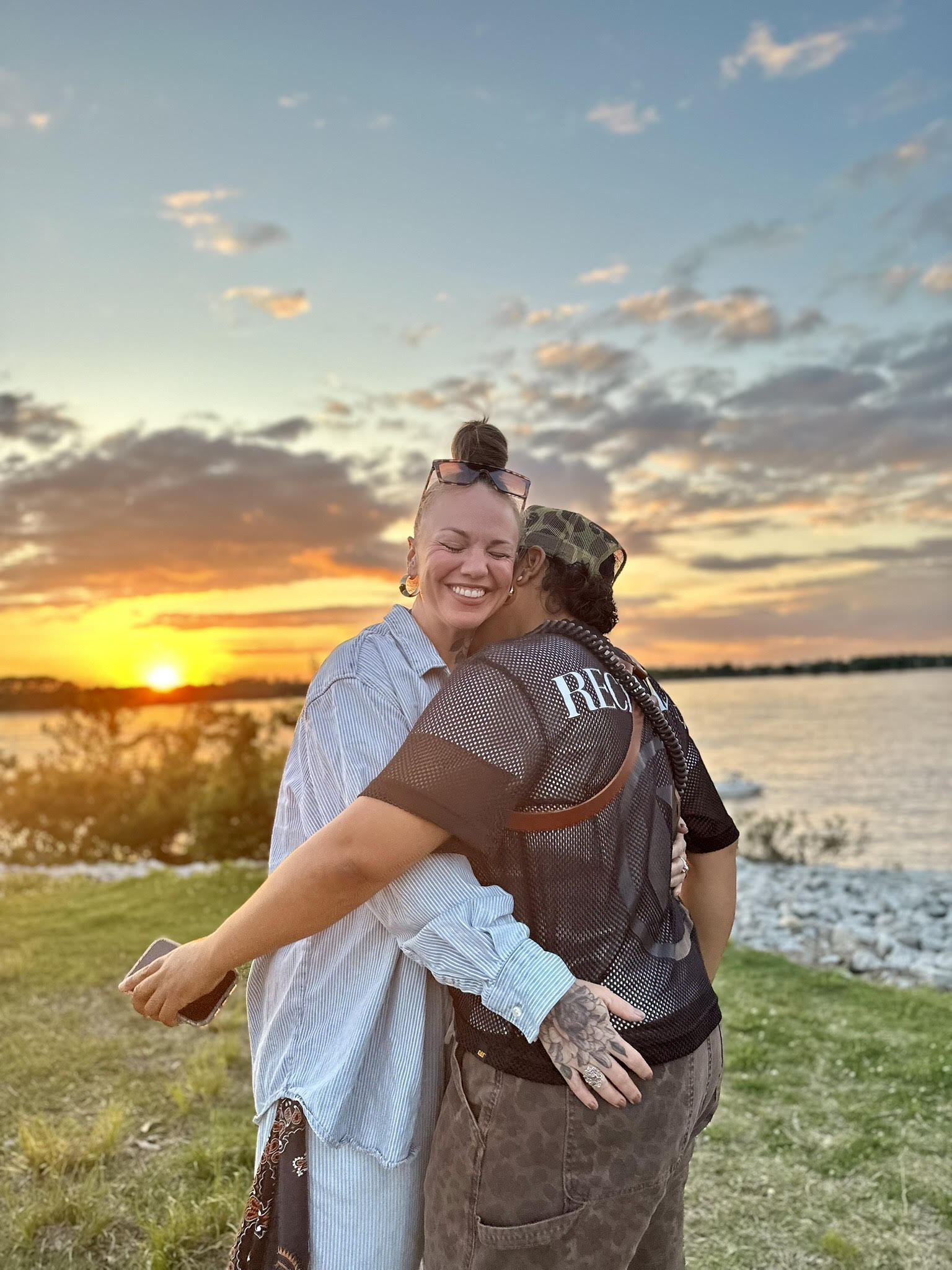
A lot of the conversations I was having in my personal life with other lesbian/sapphic/dykes I wasn’t seeing in public. And the stuff that does exist tends to center younger lesbians in New York or LA. And while I love visiting these places, and love the culture that exists there—lesbians are everywhere and as a cluster culture—our norms vary. I just saw a lot of gaps in what was available and sought to fill one.
How do you strive to provide positive and authentic representation through your work?
I feel like a lot of lesbians/sapphic folks talk about how they didn’t see themselves. The representation of lesbians when I was coming up in the 90s and early 2000s was really narrow. And the reception of them was bleak. I also was only aware of stories of people’s identity development being one way. And because I didn’t relate to that one story of knowing since childhood, comphet (compulsory heterosexuality) ruled a lot of my life. My story and my identity/person are certainly not a universal representation either. But it’s more.
I also think that people conditioned as female often have complicated relationships to sexual identity development as our value is often overwhelmingly placed in our ability to attract the attention of men. We are also tasked with avoiding violence stemming from the same attention. For a lot of us, abuse is a common factor in our relationships to our bodies and our sexuality, and that doesn’t make identifying our own desires a simple thing. In short, I just want more representation. It doesn’t all have to be positive. I’d love to be in a place where we are so used to seeing queer women/sapphic people and their stories and their relationships that we have favorites and villains and all of it. We’re so, so far from that.
I’d love to hear a little bit about your new creative agency, Style Forward.
It’s just newly on social media! As long as I’ve been sharing my own voice online through building my own platforms (15 years) I have been behind the scenes in others’ work helping them to do the same in a variety of capacities. I ghostwrite, do creative strategy, create content, and do photo and video shoots and all kinds of creative direction. Primarily with other people who are mission-driven in their work. I have been working with my current business partner Holland Colvin (stylist, photographer, graphic artist) for a little over three years.
Can you tell me about The Sapphic Syllabus archive?
I will probably die working on this project. Queer archives exist all over the country. Only some are digitized. And my goal is to round up as much as possible that is specific to lesbian/sapphic/dyke culture. This is the humble beginnings of that. We have always existed, and our place in queer culture and history is important.
Why do you feel it is important for people to surround themselves with queer history and culture?
Because nothing that is happening in our current political climate is new. And I don’t say that without so much reverence for how scary it is. Especially for trans folks who are being scapegoated as a political pawn by the current administration. And as a community, our living elders have been through similar periods. We stick together. We fight back. We always have. It’s also the antithesis of the American culture of individualism. Understanding our place in history, who came before us, who created the space and visibility we have now, what the path is to continue that legacy—that is about what we can do together.
Given current politics and some of the conversations in the media right now, what is some advice you’d give to someone struggling to continue to stay positive and active in the world of activism?
Do what you can. Make a ritual of it. I love the 5 Calls app to contact my representatives daily with scripts. Figure out who is organizing local to you and whose work you can support. Don’t skip the part where you are doing something and not just reading or thinking about it. And then make sure you touch grass. Be with people. Dance. Do the things that remind you why it’s good to be alive. Sometimes the culture of online activism can feel like the only way to be a good human is to suffer when there is suffering. And that isn’t sustainable, nor is it helpful. So don’t skip the doing. But if you forget to do the things that remind you why life is worth fighting for, you’ll lose your fight.
How can our readers support you and your work?
They can follow me online @iamerinbrown and they can listen to the podcast!

Sophie McDowell (she/her) is a writer and creator currently living in Kansas City. She got her degree in mass media with an emphasis in film and video from Washburn University. She also has minors in art, history, and women’s studies. When Sophie isn’t writing or volunteering her time to social justice, she can be found hanging out with her pets.
Photos courtesy of Erin Brown.
 Catcall