
By Emily Laptad
The 1960s and 70s marked a significant era of progress for women in the United States. The Equal Pay Act of 1963 was the first nationwide legislation for eliminating wage disparities based on sex. The Civil Rights Act of 1964 prohibited employment discrimination based on race, color, religion, sex, or national origin. The Women’s Educational Equity Act of 1972 guaranteed equal access to education for women and girls. Roe v. Wade legalized abortion across the US in 1973. The Equal Opportunity Credit Act of 1974 enabled women to open bank accounts and apply for credit cards with their own names. And other court cases and legislation further expanded women’s rights to employment, education, financial independence, and reproductive health during this time too.
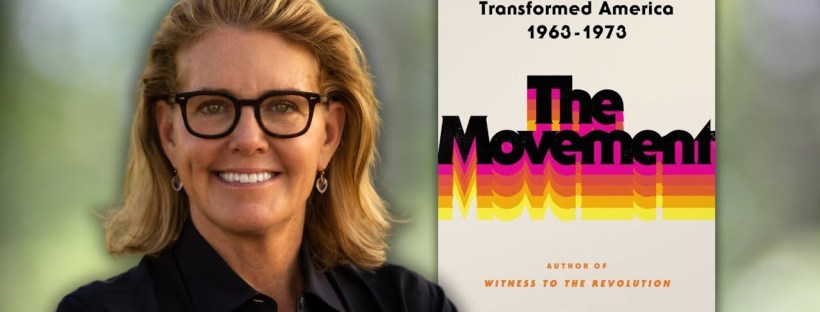
This era was known as second-wave feminism—a women’s rights movement history often credits to white feminists like Betty Friedan, Gloria Steinem, and Germaine Greer. Third- and fourth-wave feminists criticize second-wave feminism as a movement that prioritized white women and excluded women of color, but Clara Bringham’s new book, The Movement: How Women’s Liberation Transformed America, 1963-1973, challenges that version of history with the stories and voices of the leaders history didn’t remember. The former Newsweek reporter tells the story of second-wave feminism through the lens of the unsung heroes and living icons who led the fight, painting a picture much more complex than traditional historical texts.
Conversations around collective liberation are more important than ever as the Trump Administration attacks the rights second-wave feminism secured. On March 20, the Johnson County Library is hosting a live virtual chat with Clara Bringham, an important conversation about her book, the women who led the women’s rights movement before us, and insight into the fight we have before us to protect and restore the rights that have been eroded:
“Join us online for a transformative conversation with award-winning journalist and author, Clara Bingham, as she chats with us about her new book, The Movement is a comprehensive and engaging oral history of the decade that defined the feminist movement, including interviews with living icons and unsung heroes. The Movement is the first oral history of the decade that built the modern feminist movement. Through the captivating individual voices of the people who lived it, The Movement tells the intimate inside story of what it felt like to be at the forefront of the modern feminist crusade when women rejected thousands of years of custom and demanded the freedom to be who they wanted and needed to be.
This engaging history traces women’s awakening, organizing, and agitating between 1963 and 1973 when a decentralized collection of people and events coalesced to create a spontaneous combustion. From Betty Friedan’s The Feminine Mystique to the underground abortion network the Janes, to Shirley Chisholm’s presidential campaign and Billie Jean King’s 1973 battle of the sexes, Bingham artfully weaves together the fragments of that explosion person by person, bringing to life the emotions of this personal, cultural, and political revolution. Artists and politicians, athletes and lawyers, Black and white, The Movement brings readers into the rooms where these women insisted on being treated as first-class citizens and, in the process, changed the fabric of American life.
About the Author: Clara Bingham is an award-winning journalist and the author of The Movement, Witness to the Revolution, Women on the Hill, and the co-writer of Class Action. A former Washington, DC, correspondent for Newsweek, her writing has appeared in Vanity Fair, The Guardian, and The Daily Beast, among others. She lives in Brooklyn, New York.”
The event is on Thursday, March 20 at 1pm CST. Sign up for How Women’s Liberation Transformed America: In Conversation with Clara Bingham.

The Movement
How Women’s Liberation Transformed America 1963-1973
By Clara Bingham
A comprehensive and engaging oral history of the decade that defined the feminist movement, including interviews with living icons and unsung heroes—from former Newsweek reporter and author of the “powerful and moving” (The New York Times) Witness to the Revolution.

Emily Laptad (she/her) is a Kansas City-based writer and editor who’s passionate about giving a platform and a voice to those who don’t always have one. In her free time, you can find Emily with her nose in a book, singing her current favorite Taylor Swift song, playing Mario Kart with her spouse, or cuddling up with her dogs and cat.
Image courtesy of the Johnson County Library.

Disclosure: Some of the links included are affiliate links, meaning, at no extra cost to you, Catcall earns a commission if you make a purchase. Want to check out other books we recommend? Visit the Catcall Reads bookstore.
 Catcall