
By Sophia-Joelle McDowell
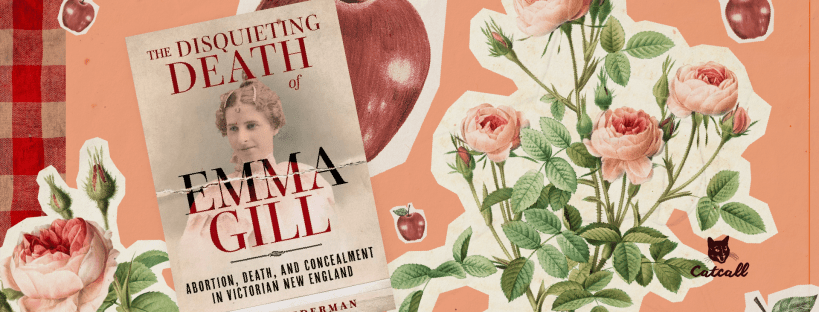
Art by Maddy Best
Former journalist Marcia Biederman, has a knack for finding stories that need to be told. As a former journalist whose work has appeared in the New York Times, the New York Daily News, Crain’s New York Business, and New York magazine, Biederman has three mystery novels under her belt and a story in the anthology Sisters in Crime 3.
Marcia considers herself a reformed fiction writer, but in recentrecent years, she’s returned to her journalism roots and written four non-fiction, woman-centric books about people whose stories should be better known. Her new book The Disquieting Death of Emma Gill: Abortion, Death, and Concealment in Victorian New England is no exception.
Catcall: What inspired you to write this true crime book?

Marcia Biederman: I now live in Brooklyn, NY, but I was brought up in Bridgeport, Connecticut. A few years ago, I happened to be looking at an 1898 edition of a San Francisco newspaper and saw the headline, “Bridgeport Murder Mystery” over a long piece illustrated with sketches of suspicious-looking characters—many of them female. Could this be my Bridgeport, I wondered? It was. Thus began my exploration into a once-notorious case that started with the discovery of a woman’s dismembered body. When a medical examination revealed that she’d died of complications from an abortion, suspicion immediately fell on Nancy Guilford, who for decades had openly practiced abortion in Massachusetts and Connecticut, flourishing in her practice although abortion was then illegal in every state.
Looking further, I could see that the story had all the elements of a great true-crime story: the suspect’s flight from justice, which eventually involved the Pinkerton Detective Agency and Scotland Yard, the complicity of the dead woman’s lover, who’d paid for the procedure, and the conflicts and dysfunction within the abortion provider’s family. But more than that, it attached names and faces to the era described in books like Abortion in America by historian James C. Mohr, when abortion was commonplace and routinely practiced by both married and single women, even though criminalized. A death resulting from abortion in Connecticut could be prosecuted as murder in the second degree, as it was in this case.
What is the key message throughout these pages?
The message emerged in the facts that I uncovered in my research: outlawing abortion does nothing to stop it. Tracing the careers of Nancy Guilford and her husband Henry, who also provided abortions, I found that criminalizing the procedure did nothing to deter them, although it had other undesirable outcomes—driving up fees for the procedure as the Guilfords faced mounting legal bills and, in at least one case, prompting Nancy to delay care while she awaited full payment.
How does it feel to know that you started writing this book before the overturning of Roe v. Wade and to see the state of things now?
Roe was the law of the land when I began, but I knew it was under attack. I was particularly outraged when, writing for the Dobbs decision that overturned Roe, Justice Samuel Alito stated that the right to an abortion is not deeply rooted in the nation’s history or traditions. My book proves the opposite: abortion is as American as apple pie. Nancy Guilford, the abortion provider at its center, was an old-stock white Protestant with roots stretching back to the American Revolution. So was her husband, who also provided abortions. The women who crowded their tastefully furnished waiting rooms obviously felt they had the right to terminate unwanted pregnancies.
Can you elaborate on what makes your book an essential read in today’s post-Dobbs landscape?
Aside from exposing the lie at the heart of Dobbs—that the right to an abortion isn’t rooted in our history—the book foreshadows the potentially disastrous consequences of recriminalizing abortion, as has already happened in many states. As I recount, a legal crackdown on abortion spearheaded by the New Haven chapter of the Law & Order League—a citizens’ vigilante group—contributed toward the death of Emma Gill and the mutilation of her corpse. We can expect more of these penny-dreadful stories to emerge from states with abortion bans unless we fight back. Those who live in more liberal states must stand with those who don’t.
In 1899, when Nancy Guilford went on trial, one newspaper wrote that most local people felt she’d merely been caught doing something done weekly in every corner of the state—but few would say that publicly. Tolerating illegal abortion wasn’t enough then, and it won’t be now. Plus, the anti-abortion forces won’t rest until they try to institute a national ban, perhaps by invoking the 1873 Comstock Act, which did nothing to stop Nancy and Henry Guilford. In fact, the Guilfords began practicing abortion – running weekly ads and soliciting patients through the mail, in violation of Comstock,around the time that act was passed.
We live in a dangerous world where people want to control women’s bodies and choices. Can you tell us a little bit about how your book addresses this conversation?
One disappointing discovery I made while researching the book is that Nancy Guilford’s husband, Henry, was sexually abusing one of the couple’s female employees. He wasn’t the kind of provider you’d want for your appendectomy, never mind an abortion. So at the same time that the male-run American Medical Association had achieved its goal of passing anti-abortion-rights legislation in every state, presumably at least in part to protect women patients, M.D.’s were forcing women to seek care from unsavory characters like Henry, who was accountable to no one. (In fact, they eventually accepted Henry, who had no medical degree, as a bona fide physician and listed him in AMA directories.)
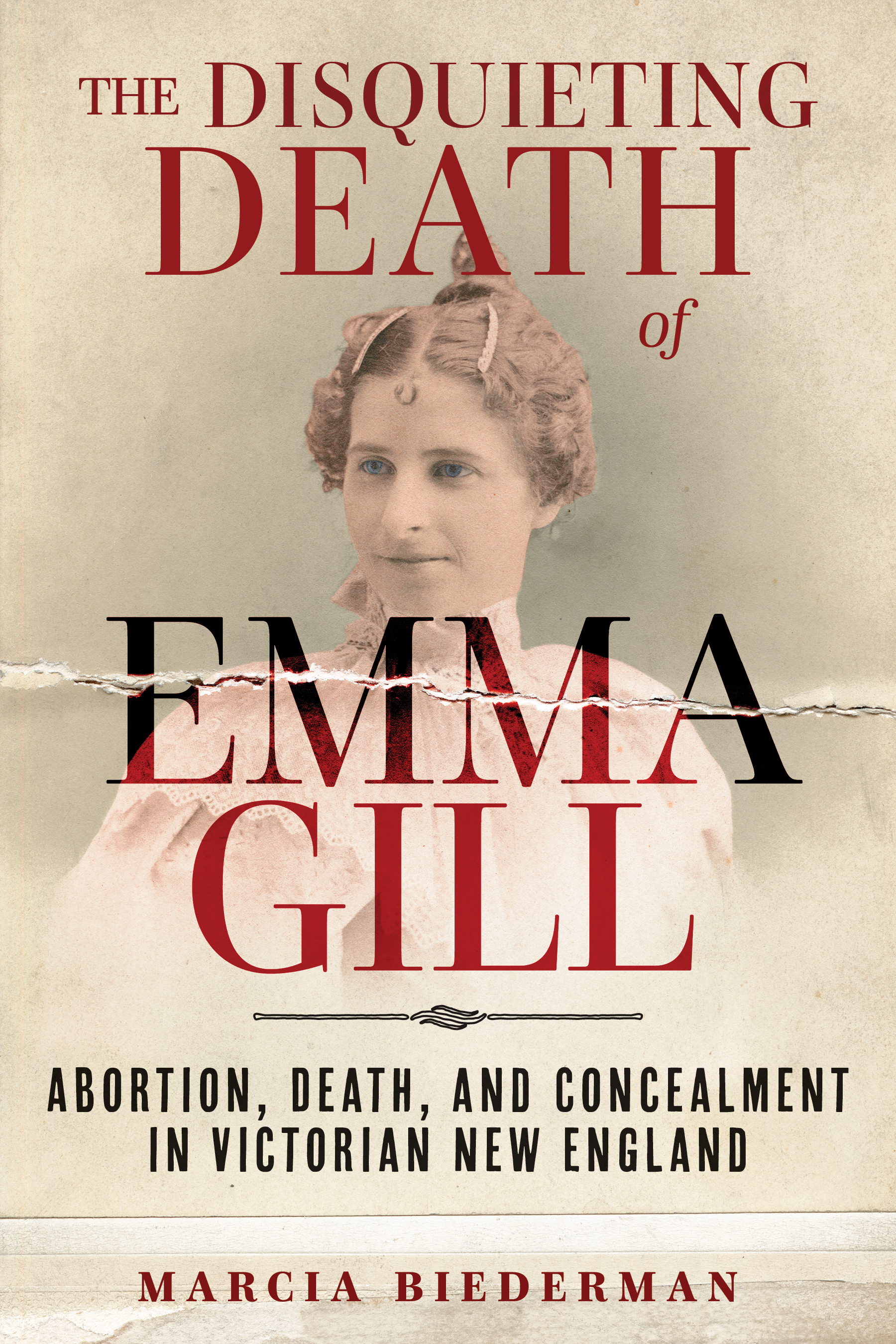
The Disquieting Death of Emma Gill
Abortion, Death, and Concealment in Victorian New England
By Marcia Biederman
In 1898, a group of schoolboys in Bridgeport, Connecticut discovered gruesome packages under a bridge holding the dismembered remains of a young woman. Finding that the dead woman had just undergone an abortion, prosecutors raced to establish her identity and fix blame for her death. Focusing on the women at the heart of the story–both victim and perpetrator–Biederman reexamines this slice of history through a feminist lens and reminds us of the very real lives at stake when a woman’s body and choices are controlled by others.

Sophie McDowell (she/her) is a writer and creator currently living in Kansas City. She got her degree in mass media with an emphasis in film and video from Washburn University. She also has minors in art, history, and women’s studies. When Sophie isn’t writing or volunteering her time to social justice, she can be found hanging out with her pets.

Maddy Best (she/her) is a first-generation Vietnamese American designer. Raised in rural Missouri, she spent five years in KC before making the move to St. Louis. As a freelancer, she uses her multidisciplinary design expertise to help people, brands, and organizations bring experiences to life. Her passion is using design to answer questions and solve problems for all people – regardless of their gender, race, status, or abilities. When she’s not designing websites or brand identities, you can find Maddy cooking, listening to the same emo playlist on repeat, watching bad sci-fi films, and playing video games.

Disclosure: Some of the links included are affiliate links, meaning, at no extra cost to you, Catcall earns a commission if you make a purchase. Want to check out other books we recommend? Visit the Catcall Reads bookstore.
 Catcall
One thought on “Marcia Biederman’s Newest True Crime Book Shows Why Outlawing Abortion Doesn’t Work”