

By Molly Stein-Seroussi
Art by Maddy Best
A note: In this piece, the terms “women/woman” and “female characters/representation” are intended to describe anyone who identifies with feminine identities and stories, regardless of whether they identify as female.
I work in film production at a company run by women. Representation of women in media is something we think about deeply and often. We just released a film that doesn’t pass the Bechdel test, but even so, this film was made to call out patriarchal structures that harm women.
If you’re a movie fan, a feminist, or simply pay attention to pop culture, you’ve probably heard of the Bechdel test. But you may not know that it was inspired by a joke—an irony that makes the method unreliable for measuring actual female representation.
In a 1985 panel from Alison Bechdel’s classic lesbian comic strip Dykes to Watch Out For, one character tells another that she has a rule about the movies she watches: the film must have at least two women in it, and they have to actually talk to one another—about something that isn’t a man. Like so much of Dykes to Watch Out For, it’s equal parts funny and poignant.
In the 2010s, decades after the original comic was published, the Bechdel test became sort of a cultural shorthand to determine if a film is “woman-friendly.” It’s morphed over the years: many have added variations like asking if the women in the script have names. It’s become a metric used by media critics and industry professionals; there are online resources where you can find out if a film passes the test, and there have even been analyses to see if movies that pass the Bechdel test are more profitable than those that don’t. To almost no one’s surprise, they are.
A 2022 study conducted a “reverse Bechdel test,” looking to see if films featured two men talking to one another about something other than a woman. Of 341 popular films from the last 40 years, approximately 95 percent passed the reverse Bechdel test, while approximately 50 percent passed the original Bechdel test. This clearly illustrates that men are still better represented in film than women.
But that doesn’t tell the whole story. The Bechdel test was originally a punchline, a broad social commentary about the underrepresentation of women in film. It was never intended to be a serious measure of a film’s feminist representation. In a 2022 interview with The Guardian, when asked about the Bechdel test, Alison said, “It was a joke. I didn’t ever intend for it to be the real gauge it has become, and it’s hard to keep talking about it over and over, but it’s kind of cool.” When asked about how it feels that so many movies continue to fail the test, she replied that “what’s really dismaying now is the way so many movies cynically try to take shortcuts and feature strong female characters—but they just have a veneer of strength, and they’re still not fully developed characters.”
While it’s incredibly discouraging that in 2024, more movies don’t pass this simple test, the metric isn’t especially helpful for determining an individual film’s feminist representation. Many heterosexual romantic comedies, for example, feature well-written, complex female characters, but a film about pursuing a partnership with a man is unlikely to pass the Bechdel test. Does that mean the entire heterosexual romance genre can’t include “good” representation of women? I don’t think so. On the flip side, a slasher film about a group of young women dying in graphic, sexualized ways is likely to pass the Bechdel test when that’s not the feminist representation most have in mind.
If offensive content can pass the Bechdel test, how can it be an accurate measure of feminist representation? Sir Mix-a-lot’s “Baby Got Back” passes the test, and it begins with a woman saying, “oh my god, Becky, look at her butt.” Two women talking to each other about something other than a man? Check—and one of them even has a name! Like any millennial, I can get down to “Baby Got Back,” but who would consider it a feminist song?
That brings me back to the film my company just produced that doesn’t pass the Bechdel test. Our debut horror short film, Biters & Bleeders, is about a woman named Penelope. She’s married to an abusive man, and the film tells her story of reclaiming agency from the husband who terrorizes her. The movie was written, directed, and produced by a team of talented LGBTQ+ women.

Our team has heard from audience members that this film helped them think differently about abuse, agency, and even their relationships with the men in their lives, but Biters & Bleeders doesn’t pass the Bechdel test. There are a few reasons for that.
In 22 minutes, a cast of three can only have so many conversations. This film examines how a man impacts Penelope’s life and psyche. Films that show how patriarchal systems and individual men affect women are liable to contain a lot of discussion of men, but does that mean the women in the film aren’t fully realized? It’s not up to me to determine what is “good” feminist representation, but the point remains: the Bechdel test is not the “be all and end all” of representation, and that’s okay because it was never intended to be.


The Bechdel test is enticing because it takes some of the work out of feminist media criticism. The idea that there’s a single objective question that one can ask to determine if a piece of media is “good for women” or “bad for women” is attractive, but it’s simply not possible.
The Bechdel test doesn’t get into the nuances of how women are portrayed, nor does it approach issues of race, class, sexuality, disability, or other marginalizations that should be considered by intersectional feminists. As a filmmaker myself, I don’t think we should let filmmakers off quite so easily, and simply being present isn’t enough. We should be demanding more.
How to determine the feminist value of media
There will probably never be one single litmus test to determine whether a film represents women well. Instead, it may be more useful to have a roster of questions you can ask yourself about the media you consume. Here are a few suggestions for things you can ask about the portrayal of women in the next movie or TV show you watch.
How are women written in the film?
- Do the women in the film have goals, dreams, and ambitions?
- If there are multiple women in the film, are they written to be distinct and separate from each other?
- Are the women in the film consistently and thoughtfully written throughout the story? Do their decisions make sense to the viewer?
- Do they have a complete character arc that changes throughout the story?
- Do they seem like a complete person, or simply a stereotype, trope, or like they are there to prop up a man’s storyline?
- If you were an actor playing this role, would you feel like you had something to work with?
How are women treated in the film?
- Are the women in the film victims of gendered or sexualized violence? If so, how is this handled? Is it sensationalized, gratuitous, or irrelevant to the film’s plot or themes?
- Are women, girls, or traditionally feminine activities, interests, and traits treated as a punchline?
- Are trans women and girls mocked or ridiculed?
- Are women and girls who are not considered conventionally attractive treated as lesser, not worth consideration, or as a punchline?
- Do the women in the film have agency, and if not, does that seem to be an intentional choice or an accident of poor writing?
Were women involved in the production of the film?
- Were women involved in above-the-line (or creative) positions? For example, did women help write, direct, and produce the film?
What themes are present in the film?
- Does the film have a central thesis or worldview? If so, how do you feel it aligns with your feminist value system?

Molly Stein-Seroussi (she/they) is a writer, film producer, and blogger based in the southeast, where they live with their spouse and probably too many dogs. They are passionate about storytelling as a tool for justice and representation in media. When they aren’t writing, they can be found thrifting, hiking, or poorly tending to their houseplants.
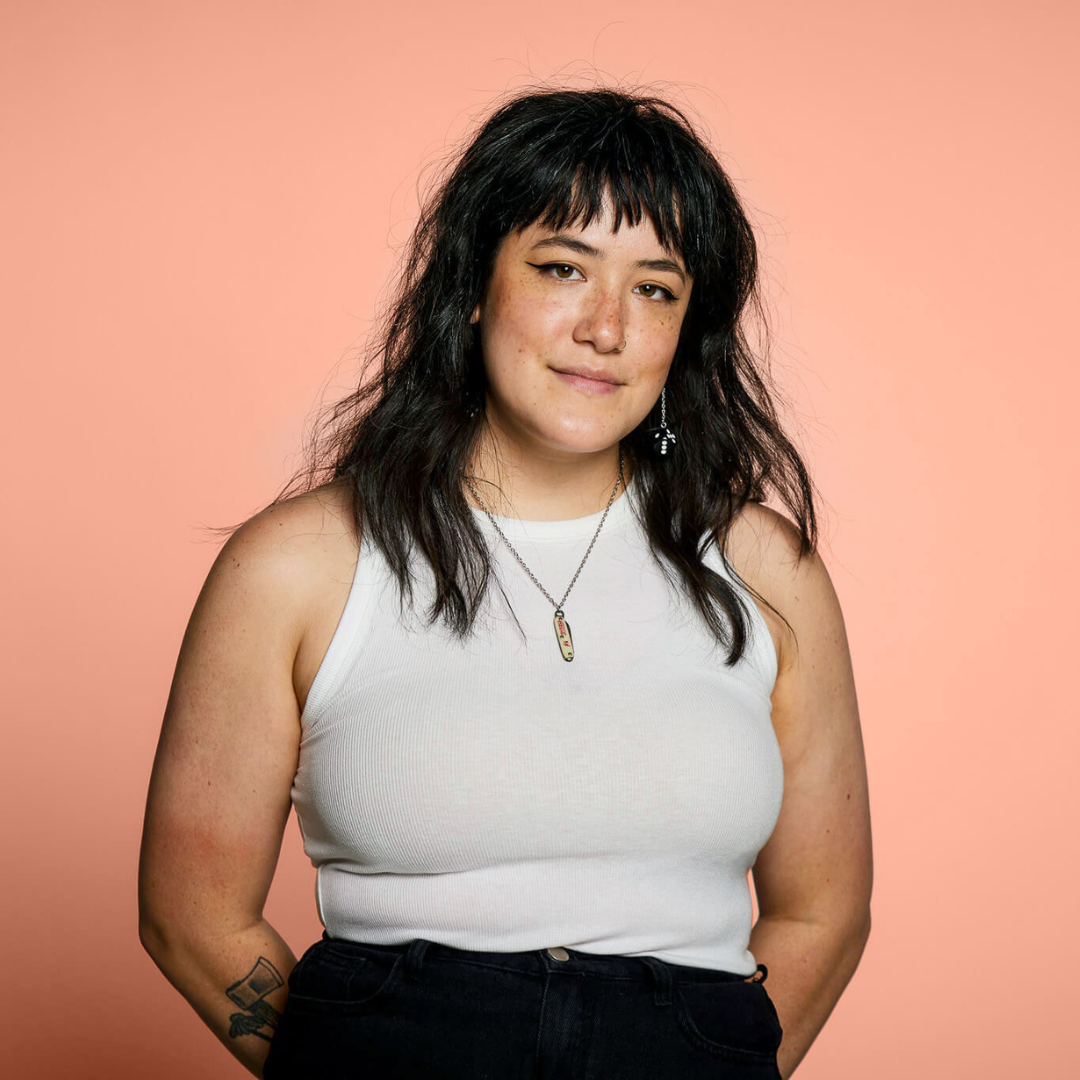
Maddy Best (she/her) is a first-generation Vietnamese American designer. Raised in rural Missouri, she spent five years in KC before making the move to St. Louis. As a freelancer, she uses her multidisciplinary design expertise to help people, brands, and organizations bring experiences to life. Her passion is using design to answer questions and solve problems for all people – regardless of their gender, race, status, or abilities. When she’s not designing websites or brand identities, you can find Maddy cooking, listening to the same emo playlist on repeat, watching bad sci-fi films, and playing video games.
 Catcall
One thought on “What is the point of the Bechdel test? It might not be the feminist media measurement we need.”