

By Sophia-Joelle McDowell
Art by Kelcie McKenney
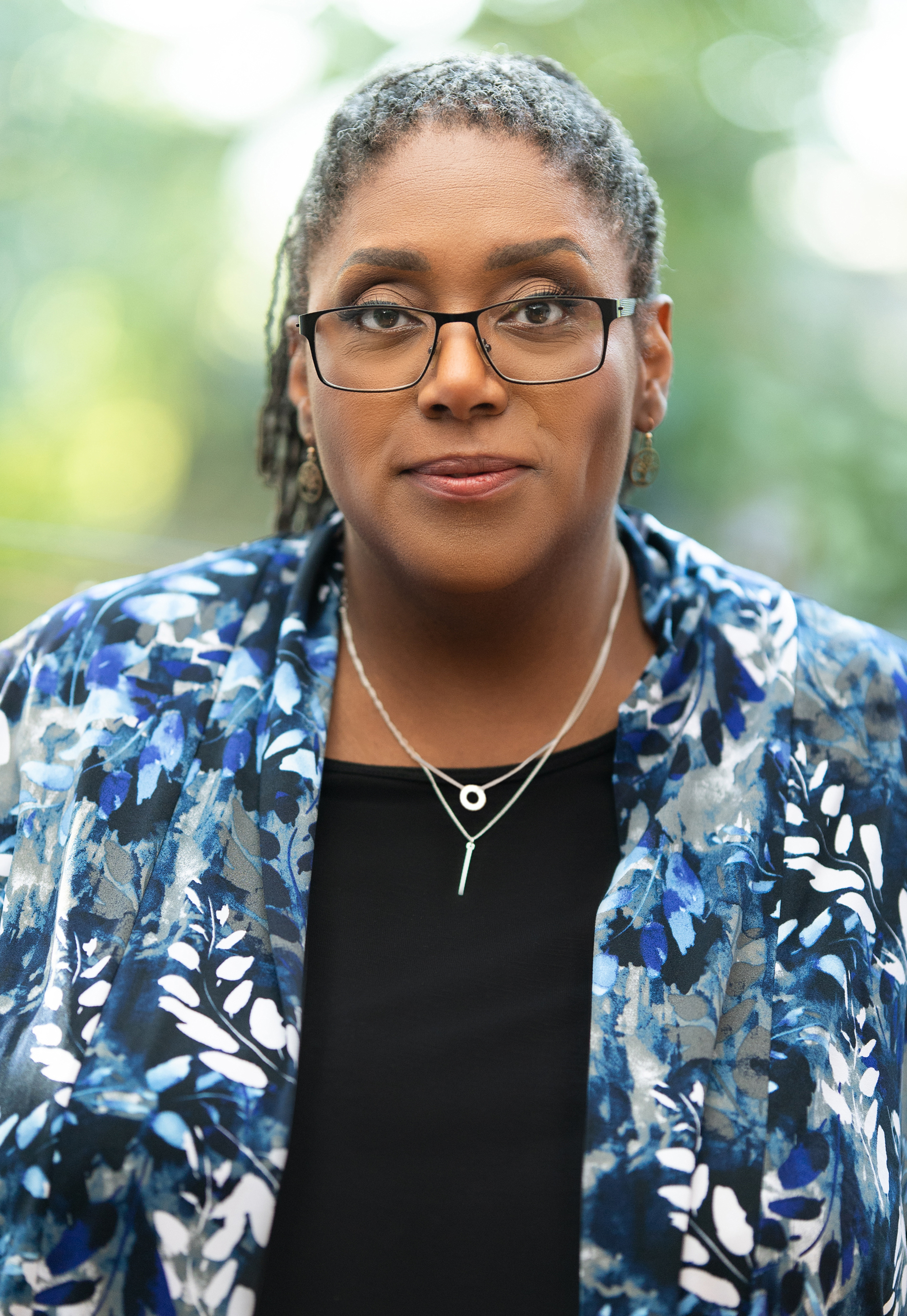
As a Black Caribbean immigrant to the United States, Dr. Roxy Manning experienced racism early in life—both at school and out in the community. These experiences fueled her passion to tackle the topic of racism in her book, How to Have Antiracist Conversations: Embracing Our Full Humanity to Challenge White Supremacy. She also co-authored with Sarah Peyton the companion text, The Antiracist Heart: A Self-Compassion and Activism Handbook.
Roxy Manning, Ph.D., is a clinical psychologist and certified Center for Nonviolent Communication (CNVC) trainer.
She has worked closely with businesses, non-profits, and government organizations throughout the United States to help them make progress in equitable and diverse workplace cultures. Additionally, Dr. Manning has worked with people in many other countries focusing on social change. She even works as a psychologist in San Francisco, serving the houseless and disenfranchised mentally ill population.
We spoke with Dr. Manning about the creation of this book and the possibilities of what it could mean to others.
Catcall: Can you describe the journey that led you to write How to Have Antiracist Conversations?
Dr. Roxy Manning: The journey for me to write this book actually began with me not writing at all!
In my second year of college, I had a professor accuse me of plagiarism because he thought that my essay was too good and that “Black people can’t write like that.” That experience, which I’ve learned is all too common for Black Americans in college settings, blocked me from accessing ease with writing for decades. I describe in the book some of the ways I worked with the trauma of that experience.
Sarah Peyton, the co-author of my companion handbook, The Antiracist Heart, had collaborated together on projects for several years. Sarah approached me and asked if I would be willing to write a book with her. I was intrigued—the thought of writing a book in collaboration with another person seems like a great strategy to get over this block. And at the same time, because Sarah had already published several books and was a white woman, I worried that if I wrote only one book with her, everyone would see it as Sarah’s book to which Roxy contributed and not fully see the truly collaborative nature of that book.
The process of deciding to write two books emerged from one of these anti-racist conversations. I shared my concerns with Sarah and she empathized and said, “Why don’t you write two books!?” And so I did. But even though I agreed to write the books, the fear of being judged, of having my ideas being unfairly dismissed because of my race, was still there. The books exist only because I was able to lean into my amazing community. I gathered a group of people who were friends and collaborators in this work. Every week I would write a little bit, and then meet with whoever was available from that group. They would either give me feedback on what I’d written, or sometimes just empathize with me when I was stuck, despairing. I can’t tell you how often they would just say to me, “You got this. We believe in what you have to offer.” They would ask me to tell them about some topic that I was thinking about writing about. Those weekly brainstorming and empathy sessions completed my healing from that early trauma and restored my trust that I could put my ideas out there and they would be received and evaluated on their own merit, not on the basis of my race.
What was your biggest takeaway when researching and writing How to Have Antiracist Conversations? Did you discover anything that was new to you?
What I discovered was not something that was truly new to me. I realized how desperately folks were longing for ways to have the kinds of conversations that could lead to change. I knew this, but people still kept being stuck in the old models of shame and blame, especially in recent years as our country and the rhetoric around racism and anti-racism has become more and more divisive, more and more binary us versus them. People were afraid. I think the intensity of the fear, of just taking the risk of having these conversations, was what was new to me. In writing the books, I took away how much support people needed to be able to dismantle the narrative that let so many of us, regardless of our identity, to freeze when faced with having these conversations. We needed compassion and self-compassion, and to learn how to do it, if we were ever to have fruitful conversations that could lead to repair rather than more division.
What do you hope those who read these books will get out of it?
After reading these books, I hope people will have more trust that they can actually show up and have these conversations in ways that will create desperately needed change while still building community. I’m hoping people will see that letting someone know that their actions are causing harm, acknowledging when we ourselves have caused harm, does not mean that we need to reject the person or ourselves. I’m hoping that the idea of beloved community, seeing the world as we see our families, can transform how we approach these conversations. That we can bring the same fierce commitment we have when we see family members who are causing harm. We speak up to our family members and tell them, hey what you’re doing isn’t working for me, while still loving them. We don’t give up on either our commitment to creating change or our determination to help our family members heal and be better/ do better. When we think of family, we know that even if we had all the resources we needed, we’re not truly thriving if any member of our family is in need or in pain, is suffering. And we keep engaging in the battle to make the family work for everyone. We need to bring that same concept of family, the concept of beloved community on a larger scale, and the commitment to the work that’s necessary to create it.
Are there any other books you recommend to keep this conversation going?
Absolutely! Healing Resistance by Kazu Haga and DEI Deconstructed by Lily Zheng for those working in organizations. The classics: Isabel Wilkerson’s Caste, and Ibram X. Kendi’s Stamped from the Beginning.
And one book that is coming out in April 2024 that I’ve had the great fortune to review: Mike Tinoco’s book, Heart at the Center: An Educator’s Guide to Sustaining Love, Hope, and Community through Nonviolence Pedagogy. It explores how teachers can support students’ thriving with nonviolence, antiracism and love. It’s desperately needed in these days when there is such a concerted attack on anti-racism in education.
How can our readers support you and stay informed on any future projects you have in the works?
Read the books! Read them, share them, review them. To emphasize how important it is to review them. Social media is great in helping folks reach a larger audience, but I’ve also had the experience of people who don’t like any conversation about these topics and who know nothing about me, find me, and post hate messages and negative comments on my social media and we know that’s happening on sites like Goodreads and Amazon. We know that there’s been an effort to find books like mine and put negative reviews, just to tank the ratings of books like these so that they don’t get seen, they don’t get in the hands of folks who are longing for this kind of support. So I ask everyone, if you’ve read the books, leave a review—whatever your honest review is.
Is there anything you would like to add or inform our readers about?
I have a delightful new podcast where Sarah Peyton and I are interviewing people who are contributing to an antiracist world in a myriad of ways. We want to show that there are a lot of ways to engage in this work—from the traditional standing in line and protesting, to many others—teaching, music, art, writing and more. Come hear some of the interviews on Fierce Compassion. Episodes are available everywhere!
Find Dr. Manning online:
The book’s website: How to Have Anti-Racist Conversations
Her website: roxannemanning.com
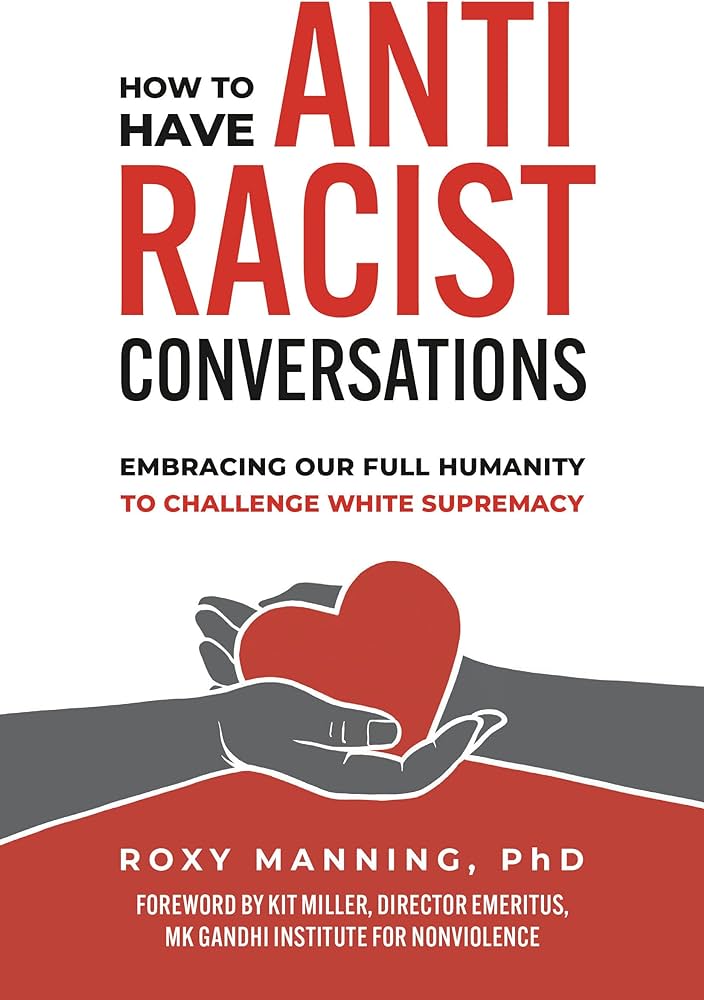
How to Have Antiracist Conversations: Embracing Our Full Humanity to Challenge White Supremacy
By Dr. Roxy Manning
Can a person be both fierce and compassionate at once? Directly challenge racist speech or actions without seeking to humiliate the other person? Interrupt hateful or habitual forms of discrimination in new ways that foster deeper change? Dr. Roxy Manning believes it’s possible–and you can learn how.
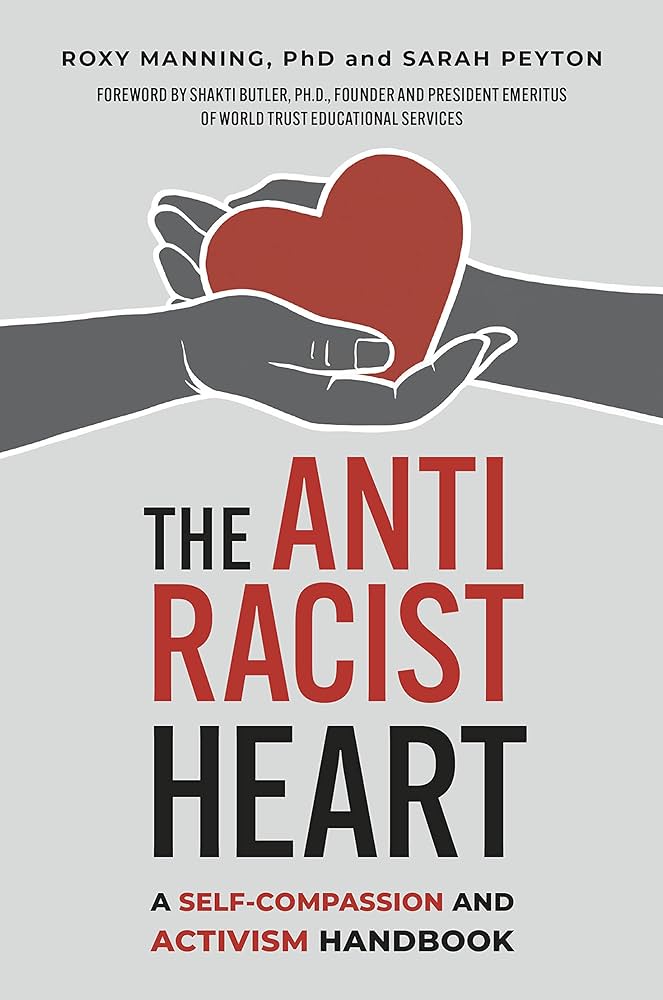
The Antiracist Heart: A Self-Compassion and Activism Handbook
By Dr. Roxy Manning and Sarah Peyton
The Antiracist Heart delivers a unique path to antiracist activism and introspection by applying neuroscience exercises, questionnaires, and journaling prompts based on the book How to Have Antiracist Conversations.

Sophie McDowell (she/her) is a writer and creator currently living in Kansas City. She got her degree in mass media with an emphasis in film and video from Washburn University. She also has minors in art, history, and women’s studies. When Sophie isn’t writing or volunteering her time to social justice, she can be found hanging out with her pets.

Kelcie McKenney (she/her) is a writer, editor, and artist who is passionate about intersectional feminism, local activism, queer representation, and strengthening community. You can find Kelcie reading (probably smut or Twilight), talking astrology, hanging with her three-legged cat and four-legged dog, or trying to overthrow the patriarchy.

Disclosure: Some of the links included are affiliate links, meaning, at no extra cost to you, Catcall earns a commission if you make a purchase. Want to check out other books we recommend? Visit the Catcall Reads bookstore.
 Catcall