
By Sophia-Joelle McDowell
As a transracial Korean adoptee living in the midwest, Hanna Lee started writing during the rise of the pandemic when AAPI hate was high and they had a lot to process.
Lee believes writing can help people process what they’re going through, and it offers a healthy and structured way of going about this.
The books they have written to process their own experiences have resonated with many readers. Lee spoke with us about their past and the pages they earned in the process.
Can you share what it was like growing up and how this impacted who you are today?
I was adopted at the age of four months by a white Christian family in Topeka, Kansas. During my childhood I grew up in a predominately white environment leaving me vulnerable to dealing with microaggressions and racism my whole life. The impact of existing in a world where my parents and those around me were incapable of understanding the trauma this caused, left me feeling extremely isolated and alone most of my life.
Fast forward to 2020 when I’m beginning to see people who look like me being targeted in the streets. Up until that point I had no connection to anyone Asian in my life—or even another BIPOC person who was capable of understanding how I felt, so I began looking for connections online and writing a story about what I was going through. That turned into my first book, The Ones Who Misbehave.
I spent every cent I had traveling from state to state across the country during the pandemic to march alongside groups of people who were protesting the rise in hate crimes toward Asians. This was the first step I took toward belonging and reclaiming the Asian identity that had been stolen from me. I write books about my experience as a transracial adoptee in order to help update the outdated belief that adoption means a better life. For me, adoption told me to be white, it erased my culture, it erased my identity, and left me as a shell of a person who was expected to be eternally obedient and grateful. Adoption has impacted every aspect of who I am today.
We’d love to hear more about what you do. How would you describe your work and what you do to readers who may be unfamiliar?
I write fiction novels that are loosely based on my own life and my journey as a transracial adoptee. My first book is about a Korean adoptee suffering from mental health issues who finds friendship within a community of Asians at a mental health facility while working through anti-asian racism and adoption trauma.
My second book is a murder mystery with a Korean-adoptee character coming to the conclusion her family is tremendously toxic—to the point she has to walk away to save herself. It also includes a non-binary character, so I was able to talk about what I was going through with my family when it came to my childhood coming out as non-binary simultaneously.
I enjoy using writing to process struggles I’m going through in my own life, turning them into fiction stories helps them feel less real to me somehow, as though it’s not my own life story I’m telling. I hope people enjoy the stories and aren’t too distracted by my own ego narrating them.
Did you always know you wanted to be a writer?
I’ve always written. I’ve journaled my entire life—I have journals back from grade school. During college I loved literature courses and creative writing, but never thought I would ever write a whole book. It took me getting older and angry enough to finally find my voice.
Your childhood and the environment you grew up in has influenced the content you write about. Tell me more about this.
Because I was raised in a household that didn’t see color, I was always accused of being deserving of the racism and abuse I suffered my whole life. No friend was ever able to support me in this because they were all white. After years of living in this environment you learn to become very small and take up as little space as possible, believing your problems are only your problems. Now that I know how many others exist feeling this exact same way within the adoptee community I’ve found online, I feel validated in speaking up about all the things I was no longer able to accept. My hope is that we will someday be able to stop the adoption machine and change the way people view legal child trafficking, cultural erasure, and the reach of white privilege.
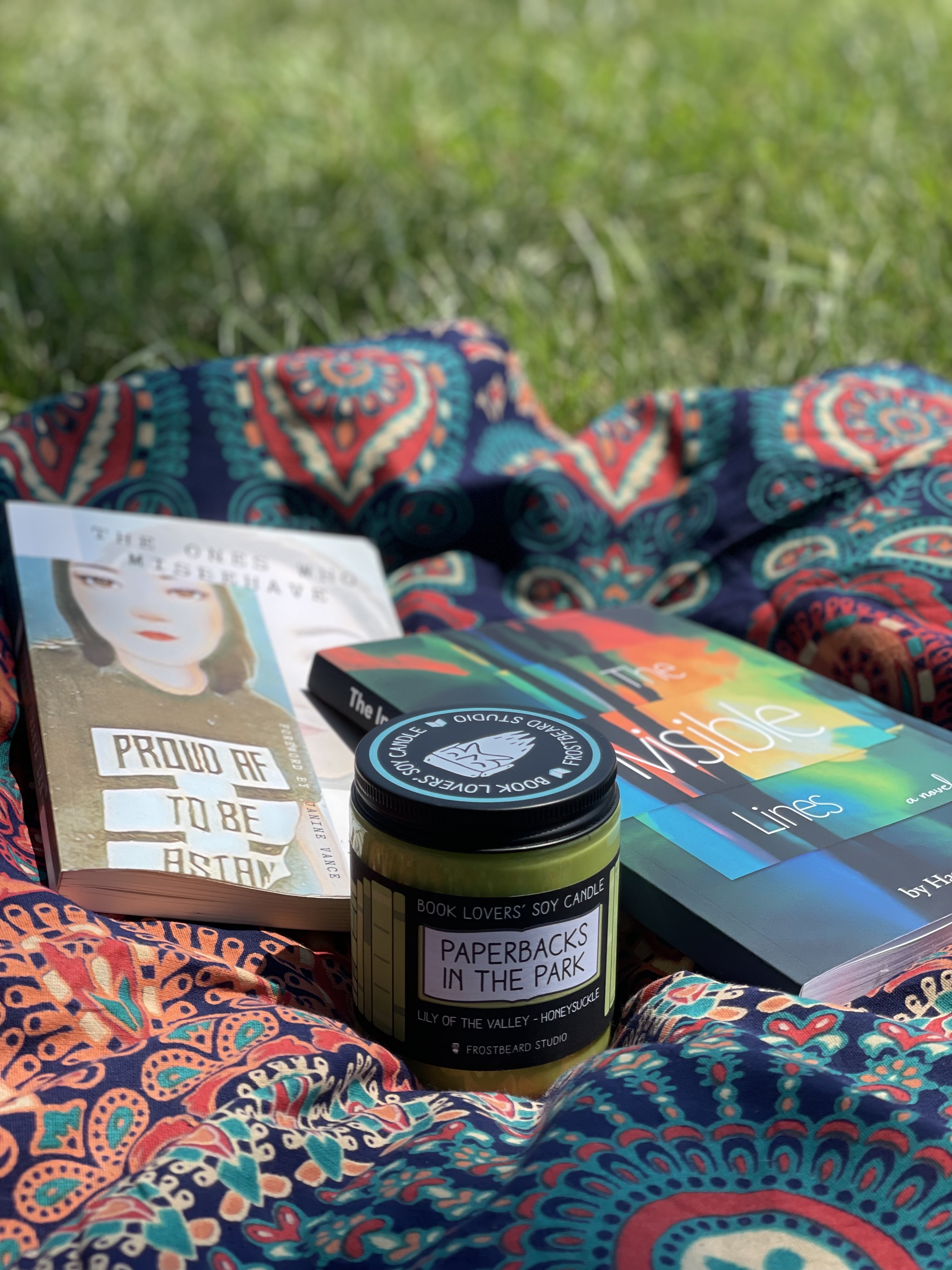
You currently have two published books, The Invisible Lines and The Ones Who Misbehave. Can you give us a brief synopsis of both?
The Ones Who Misbehave is my first book that pretty much lays out in a line some of the ways racism and microaggressions come out toward Asians. It follows someone who, like me, believed she was struggling with only trauma from racism but discovers the root of it is adoption.
The Invisible Lines is my second book which is a murder mystery. It follows a BIPOC trans individual who has gone missing while on a luxury family vacation in Aspen. This story is a mash up of two things I’m obsessed with: reality tv and true crime. Both of them are full of ups and downs, twists and turns, and surprises! Check them out!
Do you have any projects coming up that we should look out for?
Yes! I’m currently working on my third and possibly final book that will be a ‘tell-all’ style memoir/autobiography that will also include several short stories.
How can our readers support you and your work?
You can catch me doing pop-ups around Kansas City, I announce the events I’ll be at on my Instagram, or you can buy my books on Amazon or Barnes & Noble.

The Invisible Lines
By Hanna Lee
The Invisible Lines is a little bit horror in the woods and a little bit cliche influencer reality tv. When a guest of one of the wealthiest influential families goes missing on vacation, suspicious things start to happen around the mountain top mansion. Luckily, the family’s staff are a group of young, quick- thinking individuals who risk everything to try and discover the truth.

Sophie McDowell (she/her) is a writer and creator currently living in Kansas City. She got her degree in mass media with an emphasis in film and video from Washburn University. She also has minors in art, history, and women’s studies. When Sophie isn’t writing or volunteering her time to social justice, she can be found hanging out with her pets.
 Catcall