

By Ayanna Smith
Art by Maddy Best
If you type “male gaze” into the search bar on Twitter or TikTok, you’ll be met with thousands of hot takes on the issue. From videos questioning whether a new TV show really gives depth to the female protagonist to explanations of why a beloved 90s film is actually super misogynistic, they all call for more media that showcases the female gaze. Let’s dive into what that means.
You know the male gaze when you see it. It’s when a female character’s purpose is to pleasure the male protagonist. We barely know anything about her or her objectives, she’s just there to help the protagonist achieve his goals. Take most of the James Bond movies as an easy example of this: his female co-stars are often objectified and seen as passive helpers.
Coined by Laura Mulvey in her 1973 essay Visual Pleasure and Narrative Cinema, the male gaze boils down to the objectification of women characters on screen. It represents the gaze of the heterosexual male viewer, the male characters inside the film/tv show, and the male creator and/or filmmaker of the work. The male gaze leaves very little—if any—room for women. It gives no thought to the emotions of the women in the film, the women watching the film, or the women who may be behind the camera helping make the piece of media.
So, what’s the female gaze? It’s a little harder to pin down. The female gaze is simply letting women have agency on screen, allowing women to have a full range of emotions, showing them knowing exactly what they want, showing them confused, distraught, happy, lonely, in love, and everything in between.
Because the female gaze is so broad, it can be shown in many different ways on screen. Commonly, works with a strong female gaze have a woman protagonist, but that’s not necessarily a rule. The female gaze allows a sense of curiosity around female characters in the story. It’s thoughtful and intentional about what’s shown on screen, ultimately letting the woman be a fully realized and three-dimensional person. Hmm, imagine that.
As I mentioned earlier, anyone—regardless of their gender—is capable of making media told through a female gaze. And on the flip side, media made with women protagonists or by women creators is not automatically done through the female gaze.
Take the TV series The L Word, which ran for six seasons from 2004-2009. The L Word follows a group of queer women living in Los Angeles. Viewers are treated to the ups and downs in the messy lives of the six stars of the show. You would think the story would naturally come with a female gaze as it’s created by a queer woman and about the lives of lesbians. However, many people have criticized the original series for often engaging with an active male gaze.
A lot of the sex scenes in the show come from a voyeuristic point of view: wide shots that make it feel like the actors are performing the act for someone rather than the scene feeling like an intimate thing happening between two people who want to be in the moment together. Sex scenes don’t always have to be super emotional or only necessary to move the plot forward. Still, there is a difference between sex scenes that have depth, curiosity, and agency, versus scenes made to please the audience watching it. That’s the difference between the male and female gaze.
I lean toward films and TV shows with a strong female gaze because of the thoughtfulness and curiosity it gives characters. I like how the camera might hold on a character for a long time, allowing the viewers to feel like they are processing the emotions with them. A movie from the female gaze might be paced slower or have longer shots that encourage audience members to interrogate what is happening on screen. Ultimately, this allows characters other than cis white men to take up and hold space when they are often told to be smaller.
Today, more stories are being produced with a female gaze, but we have a long way to go. We are nowhere near gender parity in the film and television industry—and that’s not even considering the nuanced conversations around gender and people of color.
The only way we’re going to get more stories told through a female gaze is if we allow more marginalized communities the opportunity to share their stories and their craft. And that’s not just directors and writers, we need more diversity in cinematographers, producers, and editors too. That’s why the current WGA writers’ strike is so important, so that more people can see filmmaking as a viable career option. Who knows the breadth of stories that could be shared when all characters are given the agency they deserve?
Here are some of my favorite works that have a female gaze:
The Miseducation of Cameron Post (2018)
Directed by Desiree Akhavan, this film is set in 1993 and follows the story of a teen named Cameron who is sent away to a remote conversion therapy camp after she is caught making out with another girl.
The Watermelon Woman (1996)
Directed by Cheryl Duyne this film is about an aspiring Black lesbian filmmaker who’s researching an obscure 1940s Black actress billed as the watermelon woman.
Lady Bird (2017)
Directed by Greta Gerwig this film is about a catholic high school senior from “the wrong side of the tracks.” She longs for a “bigger life” and deals with the ups and downs of her senior year while also navigating a complicated relationship with her mother.
Portrait of a Lady on Fire (2019)
Directed by Céline Sciamma this film is set in 1770s France. A young painter, Marianne, is commissioned to paint a wedding portrait of the bride-to-be Héloïse. Héloïse, however, is stubborn and doesn’t want to be painted. The two fall in love as Marianne must find a way to paint the portrait without Héloïse’s knowledge.
Yellowjackets (2021 – Present)
Created by Ashley Lye and Bart Nickerson, this TV show follows high school girl soccer players who survive a plane crash deep in the Canadian woods in the 1990s. The series follows the complications of surviving in the woods while their adult counterparts are still dealing with the aftershock 25 years later.

Ayanna Smith (she/her) is a writer and filmmaker living in Chicago. She received a BFA in Digital Filmmaking from Stephens College and is most passionate about creating stories showcasing POC coming to age in complicated ways. Some of her favorite things are reading, hanging out in coffee shops, and taking 5 min power naps in the middle of movies (Please make movies 90 mins again, I’m begging).
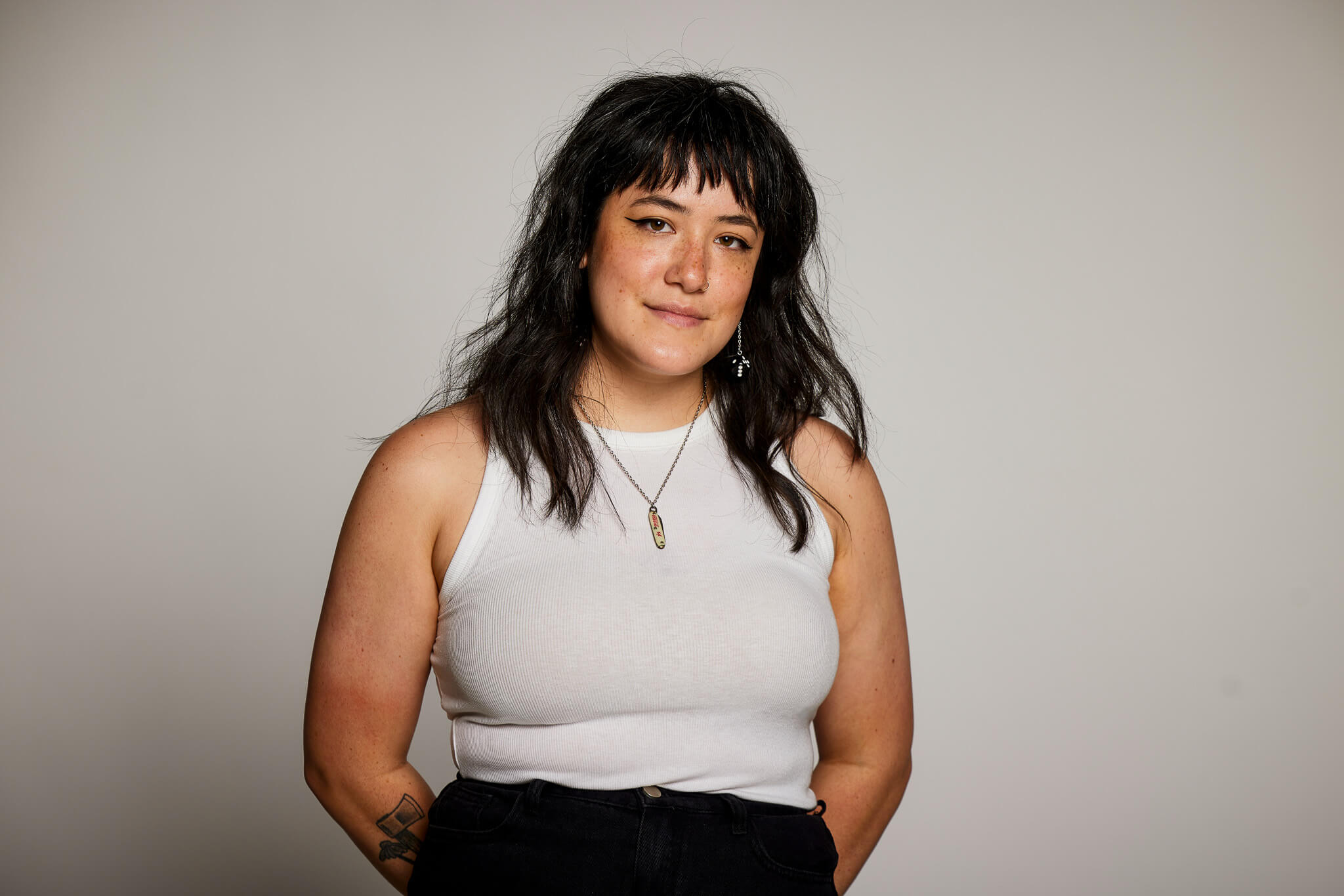
Maddy Best is a first-generation Vietnamese American designer. Raised in rural Missouri, she spent five years in KC before making the move to St. Louis. As a freelancer, she uses her multidisciplinary design expertise to help people, brands, and organizations bring experiences to life. Her passion is using design to answer questions and solve problems for all people – regardless of their gender, race, status, or abilities. When she’s not designing websites or brand identities, you can find Maddy cooking, listening to the same emo playlist on repeat, watching bad sci-fi films, and playing video games.
 Catcall
One thought on “Why we need more of the female gaze in Hollywood”