

By Max Sheffield-Baird
CW: discussion of domestic abuse, sexual assault, incest, victim blaming
Trauma is both a personal journey and a community reckoning. Survivors understand better than most that the abusers lurk amongst the illustrious, the trusted, and those who are seen as leaders in their community circles. This bears out in headline after headline, but even deeper and closer to home for so many of us.
Dr. Judith Herman’s book Truth and Repair gives us a roadmap for truth, accountability, and healing as a community that does more than pay lip service to survivors. How many of us have been made to feel that it was our speaking our truth that was the problem instead of those who would use and abuse their authority against us? I wanted to know how survivors can navigate the personal and political, and Dr. Herman brings a lifetime of insights and experiences to this work.
The Origin of DV Shelters and the Legacy of Feminism
Catcall: What what of your own experiences do you feel like have brought you to work specifically with survivors? What is your own lived experiences that you think bring you to this?

Dr. Jutith Herman: Being female basically. The women’s movement was what changed my life and I was in the consciousness raising group. And the second wave we had the same kind of consciousness raising, and then for the first time, public testimony about gender-based violence and how widespread it was. So I joined the consciousness raising group Bread and Roses Collective #9 six months before I began my psychiatric residency.
The first two patients I saw on the inpatient service, where I began my training were women who had made suicide attempts, seriously suicidal and committed to the hospital. Both of them disclosed father-daughter incest.
Now, at that time, the basic psychiatry textbook estimated the prevalence of all forms of incest at one case per million. What do you think were the odds that I would see two cases in my first month of inpatient service?
…Back in the day during the second wave, the battered women’s shelters were created by the women’s movement. Just bunches of volunteers got together and did it. There was no such thing. Before we had our shelter, I was working at a women’s free clinic in Somerville, which is a white working class suburb outside of Boston. Before they started Respond, which is the women’s shelter we have now, it was an underground. There was a network of women would turn on the light from their porch as a signal that anybody who is fleeing violence could come.
Coming Forward & Making Meaning from Trauma
Bringing the truth to light is often triggering and even retruamatizing. How can survivors manage and balance their own well-being, but also healing the community and that accountability process?
I think a lot of it has to do with having a good support system and group. The first person to go public is always the one who really gets slammed. And so you want the timing to be right for you and you want your support system to be right. One of the things my colleague Emily Chateau and I did for many years was help people prepare if they wanted to disclose either in the family or family disclosure or family confrontation.
And what we would say is, “You gotta pick your time and place, you’ve got to plan it carefully, and you’ve got to have your supports in place.” You don’t want to do this impulsively. You really want to think long and hard about when the time is right for you and who’s going to be there for you to help you prepare and where are you going to go for support afterwards?
Just be ready for whatever happens. We wanted to ask people—“Suppose you do this disclose and your mother or your sister or cousin doesn’t believe you,” and if they say, “Oh, I would be devastated.” Then we say don’t do it then. Don’t do it yet because that’s giving away your power, you’re allowing the other person to determine whether it’s going to be a success or not.
You’re saying, “Look. I’m not afraid of you anymore. And I’m not keeping your secret.” And no matter what he does, it’s going to be a win for you.
Same thing with a confrontation. Of course you’d love to have an admission or an apology. But suppose you get denial. Suppose you get “You always were crazy” or”‘You asked for it,” and if she says, “That’s his problem. But I’m not going to keep his secret anymore.” Then yeah, go for it. Because you’re ready. Because it’s going to be a success from your point of view. No matter what the other person does. You’re saying, “Look. I’m not afraid of you anymore. And I’m not keeping your secret.” And no matter what he does, it’s going to be a win for you. So that’s how we help people prepare—who’s got your back and what’s the timeline for you?
I also think that, when these things that are more public, it feels like survivors, even that aren’t necessarily engaged in that abuse end up recounting those experiences, right? To engender that empathy from people who have never experienced it.
How can as a community, can we support those people who choose to come forward and use that to build that empathy in the community?
We have pretty good studies now that show that having a sense of purpose in life is associated with resilience. And so when people actually come forward and make their story a gift to the community, it transforms the meaning of it. And they’ll say things like, “If I can help one other person who’s been through this, or if I can prevent this from happening to one other person, it won’t have been in vain.”
You see this with gender-based violence, you see this with violence of war. I have a colleague, Robert Chang Lifton, who after World War II interviewed survivors of the Hiroshima atomic bomb. And they talked about how they made meaning out of their survival by joining a movement to prevent this from happening again, to prevent war. And to raise people’s awareness about what nuclear war was really like. And they said that, “Otherwise I would have felt like maybe it would have been better if I had died too. No, because my whole world was destroyed.”
The altruism of they’re joining a movement also gave them a new community. I think we can support survivors in lots of different ways. Just even a letter. Or in these days a text or email or whatever. From someone saying, “You saved my life.”
“I admire you because you’re so brave.” And that means a lot to people.
In your experience with survivors, do you see that they, because they may be trying to make meaning of what happened, are they more inclined towards working towards justice in these institutions? What skills or character traits or even unique frame of reference do you feel like survivors bring to that specific type of work?
Again, Robert Lifton talks about survivor wisdom. There’s a kind of a deep knowledge of the worst that people are capable of. But it needs to be transformed. From helpless rage and often self blame and shame to a real sense of righteous indignation.
And so many survivors have been told that “It’s all your fault.”
I think we can support survivors in lots of different ways. Just even a letter. Or in these days a text or email or whatever. From someone saying, “You saved my life.”
“You asked for it.” Or “You’re no good. You deserved it.” And so again the answer to shame is acceptance, empathy, and compassion. That’s one reason we love to do support groups for survivors. Because they’re so therapeutic, people make enormous gains in these groups. Because they have compassion for the other group members. They get it, they just don’t have self-compassion. It’s not just about telling your story, it’s about getting feedback from other people taking it in.
Actually, we sort of challenge people to take in the compassionate feedback they are getting from other people. And actually accept it, consider that maybe they’ll say to each other, “But you were, you were a kid. It doesn’t matter what you were wearing or whatever. All right, so you didn’t have dinner on the table on the dot. So what you still don’t deserve to get beaten.”
And they’ll say “Yeah, but…” Bit by bit, they take it in. And that’s very liberating.
Reshaping Culture through the Next Generation
I really liked how in your book you say the proving ground is college campuses to prevent gender-based violence and these power dynamics. What do you think is really the key to preventing these power dynamics from developing at younger ages?
Primary prevention is all about education. And that has to be physical as well as intellectual, I think. One study looked at women who had some preventative education, including actual roleplays, scenes about how to protect yourself. And they were half as likely to get raped in college.
When my daughter turned thirteen, knowing what I did about violence against women and girls, the peak ages for sexual assault are between 12 and 24. I said, “Honey, I thinks it’s time for you to take a self-defense class.”
She said “What about you mom?” I said, “Me?”
She said, “Yeah, you.” So we did it together.
And this was a course they called back then model mugging where you know, it wasn’t karate or stylized. It was how to fight dirty, how to fight when you’re pinned to the ground, where to aim your kick.
And it was team taught by a woman fight instructor and a man who was wearing a huge protective helmet and it made him look like a monster. And lots of protective body gear. And he would attack you.
That’s why we need each other. Formal structures of justice were not built for us.
And the deal was that you had to fight until you delivered what would be considered knockout blow if he hadn’t had all that protection. And she would, he would accost you and say things like, “Hey bitch.”
And I have to say after that class, the high school was a pretty hard drinking school. There were an awful lot of parties where girls would get drunk and then people would hit on them. And they knew they have to watch out for each other.
How would you tailor that towards parents who may be raising boys or sons?
It’s one of the things that we do with boys. For the book I interviewed and met a psychologist named Saed D. Hill who runs a program at Northwestern called MARS (Masculinity, Allyship, Reflection, and Solidarity).
They do a lot of awareness about ways that masculinity is traditionally associated with violence and dominance. When the guys open it up, they talk about how afraid they are of other men, of being called a sissy, a pussy, a f*g… all that kind of shaming that men do to one another to toughen them up.
Dr. Hill doesn’t call it toxic masculinity, he talks about it as restrictive masculinity and how limiting it is for men and how much it is in their interest to have more egalitarian relationships. I think there’s lots that can be done for boys as well. It’s less shaming and blaming and it’s welcoming instead of making them feel defensive and attacked.
Legislating Community Accountability
How can legislation contribute to accountability?
There’s legislation that a lot of people don’t know about that’s very progressive and could use a lot more financing. It’s called the Victims of Crime Act. It was passed during the Reagan administration as a the sort of law and order order measure. But it’s a trust fund that was created based on fines on offenders.
The money goes to help victims. There are state trust funds in each state as well, so it’s not taxpayer money, it’s offenders paying victims back, and victims sit on the board. The money goes, first of all, for individual victim compensation, for medical expenses, and time lost from work. It goes to support victim advocates in the courts, rape crisis centers, battered women’s shelters and organizations like that. There’s an argument to be made that the taxpayers should be kicking in to that fund too, because it’s not just the offenders. It’s also enablers.
Is monetary compensation enough? Like you said, people might not even acknowledge that they did wrong. There’s a lot of people who will probably to their grave say that they never abused whoever. What would be considered enough? I’m sure that’s a personal question that each person has to ask themself, but it sounds like you have some thoughts.
I think there’s nothing wrong with money. But most survivors will tell you that’s not the top of the list. They want acknowledgement from not even necessarily from the perpetrator, but from the wider community, And may want an apology and again, not from the perpetrator but from the wider community. It’s that giving back to help a survivor heal. And that means the most.
I think that that’s definitely aspirational right now. But I would definitely agree with that.
And of course holding the perpetrators accountable. Not necessarily punishment but containment and control and setting limits.
Oh, yeah. And I think to myself, like when people do apologize, the only valuable apology is changed behavior, not the words. That doesn’t just count for the perpetrator. Like you said, the enablers need to change their behaviors to feel genuine.
Claiming our Nation’s Past Influences the Present
I think that the justice and the abuse is all interdependent. If we can’t acknowledge the truth of child abuse, gender based violence, how do you see this in parallel to the banning of teaching the institution of slavery in many parts of the country?
How can we acknowledge both abusive history as a community, as a nation, and as a society?
Any time you have a society where the dominance of one group over another is deeply embedded in tradition you’re going to have this kind of denial. Whether it’s about the legacy of slavery. Whether it’s about the crimes of patriarchy. Whether the dominance is based on race, or caste or class or gender or religion.
The dominant group is clinging to its mythology that everything is peaceful and wonderful under their dominion and this is what God wants. And this is the natural order of things. And anybody who complains about it is a troublemaker and deserves what he or she gets and needs to be put in his or her place. That’s the ideology.
The dominant group is clinging to its mythology that everything is peaceful and wonderful under their dominion and this is what God wants. And this is the natural order of things. And anybody who complains about it is a troublemaker and deserves what he or she gets and needs to be put in his or her place.
When you’re challenging it, you have to be prepared for backlash. And of course that’s what we’re seeing now with the enormous white supremacist backlash that our country is struggling with.
I’m going to tell just a short story to illustrate one of my questions. And I think it goes along with what you’re saying. ‘Cause there is that white supremacy that’s at the heart of everything. When I first dealt with gender-based violence over 10 years ago, my life was being threatened. And so I called the police, like I, as a white middle-class person was taught to do because the police are there to help them.
But the police are not really there to help you. And it was that first time where I felt like I could tell my story and I was very much shut down. It wasn’t believed and I was actually threatened with being arrested. It told me “Okay, so the cops are not here to keep me safe.” That was further traumatizing an already traumatized person.
How can survivors feel comfortable coming forward with these stories when the very legal system itself is full of those people who are known to abuse their authority and their power. And to uphold that dominant hierarchy? And I even find myself well, I’m a white person. My white privilege told me I should tell the cops.
That’s why we need each other. Formal structures of justice were not built for us. So that’s why we need a movement.
I have a colleague at Harvard Law School, Diane Rosenfeld. She just wrote a cool book called The Bonobo Sisterhood. And then she’s taught their Title IX course for years, and teaches their course on gender-based violence and so on. And she worked in a district attorney’s office.
She knows the law inside and out and she says “If you think the law’s gonna help you, don’t hold your breath.” We need each other. She’s actually gone to Africa to study bonobos who are the feminist opposite of gorillas.
So is it about how we can learn more about that social structure?
Yeah. How we could take that model. She calls it the bonobo distress call when one is being attacked. They all rally.
What do you think people who are not survivors how can they support and help dismantle some of these abusive systems?
Almost everybody has personal lived experience of what. It’s to be one there. Whether it’s a specific kind of mistreatment or more generalized experience of what it’s like to be in a subordinate group.
My friend and colleague, Emily Chateau, does two groups and family work with me. She in her other professional life has done a lot of diversity equity and inclusion consulting for years with a group called Visions.
One way they analyze intersectionality is they talk about the characteristics of the dominant group and the characteristics of the subordinate group and then have you rate yourself as which group you belong to on all these different dimensions. Sex, gender, orientation, religion, class race, and so on.
Most people, unless you are Christian, heterosexual, white, cis male, middle-class or wealthy, you’re in the dominant group in some dimensions and you’re in the subordinate group in other dimensions. As you referred to yourself earlier, you have the experience of both. Most people do. I think that’s very helpful because it means most people have the potential to get it.
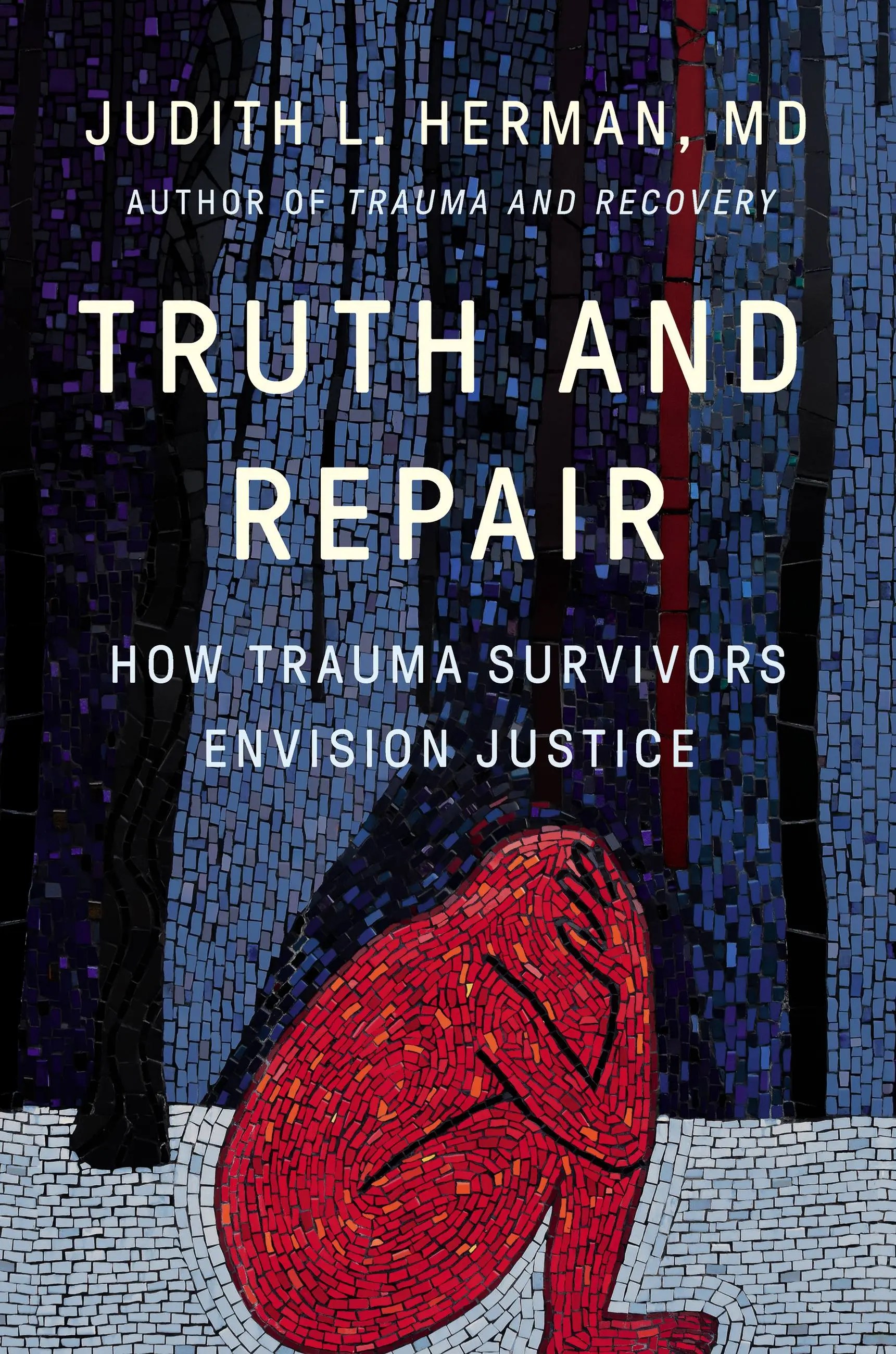
Truth and Repair: How Trauma Survivors Envision Justice
By Judith L. Herman, MD
From one of America’s most influential psychiatrists, an “extraordinary” and “profound” (New York Times) manifesto for reimagining justice for survivors of sexual trauma.
Max Sheffield-Baird (they/them) is a writer and marketing strategist who’s passionate about racial and economic justice. Max is a parent of a rambunctious infant and is a student at Colorado State University and is expected to graduate in July 2021. In their dwindling free time (hello parenthood!), they enjoy podcasts, reading fantasy and non-fiction, and educating people on kyriarchy on the internet.

Disclosure: Some of the links included are affiliate links, meaning, at no extra cost to you, Catcall earns a commission if you make a purchase. Want to check out other books we recommend? Visit the Catcall Reads bookstore.
 Catcall